You have hit an important life stage, transitioning from school or national service to your first full-time job. This marks the moment you start earning a regular salary and taking charge of your own finances.
Gaining independence can feel both exciting and overwhelming. As you start paying for your own expenses and saving for the future, it's natural to question how you can consistently make smart financial decisions.
This leads to an essential question: what's the best way to budget your first paycheck?
Understanding what you receive: From salary to take-home pay
Before deciding how much to save or spend, it helps to understand how much is credited into your bank account each month.
When you receive your payslip, you may notice your take-home pay is lower than your stated salary. In Singapore, this difference is largely due to Central Provident Fund (CPF) contributions that support your housing, healthcare and long-term retirement needs.
If you are a Singapore citizen aged 55 or below eligible for CPF contributions, 20% of your monthly salary1 goes to your CPF accounts, based on 1 January 2026 contribution rates. Your employer contributes an additional 17% for a total contribution rate of 37% of your salary.
Singapore Permanent Residents (PR) contribute a graduated rate in the first two years of permanent residency and rates similar to citizens from the third year. You can estimate your CPF contribution using the CPF contribution calculator2.
Once you know how much money you take home each month, the next step is deciding how to use it with intention.
A simple way to budget your salary
A useful starting point for budgeting is the 50/30/20 rule which allocates your income across three categories: needs, wants and savings or investments.
- 50%: Around half of your take-home pay goes towards day-to-day essentials, such as food and transport, as well as fixed expenses like insurance and tax payments.
- 30%: Set aside about 30% for lifestyle expenses, such as dining out, gaming or travel, to enjoy your income.
- 20%: The remaining 20% is reserved for savings and investments to help you build an emergency fund and work towards longer-term financial goals, such as saving for your first home or preparing for other major life milestones.
This rule is meant to be a guide and is not fixed. You can adjust it based on your personal circumstances and goals.
For instance, if you don't have any emergency fund, your main goal could be to save more and build one up. Planning to buy your first home soon? You may need to reduce lifestyle spending, such as overseas holidays, to ensure you have enough cash for the down payment and renovations. Building saving and investing habits early can also make a meaningful difference to retirement outcomes.
Let’s look at each category.
1. Covering your needs: Essentials, insurance protection and debt
Necessities often take up the largest share of your budget but can be difficult to define. Distinguish between needs and wants by asking yourself if this is essential for your survival, health or ability to work. If your answer is yes, it’s a need.
Here are some key needs you should budget for:
Everyday expenses
Essential expenses go beyond obvious costs like meals and transport. They may also include items like workwear, social obligations like parents’ allowances as well as healthcare needs. Fixed expenses like streaming subscriptions can also add up. A common mistake is underestimating these costs.
Without a clear plan, small and irregular expenses can quickly accumulate, leading to overspending by the end of the month. You may fall into a cycle where you are constantly waiting for the next paycheck.
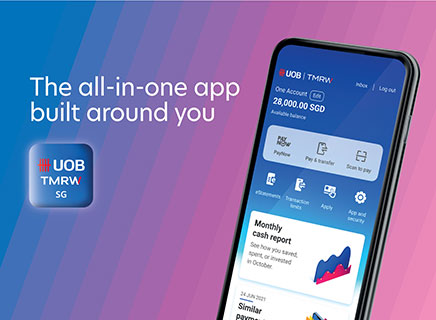
To avoid this, go through your bank statements from the past six months. Digital tools like the UOB TMRW app provide personalised insights into monthly card spending, allowing you to track expenses by category and compare them with your average over the past five months. This makes it easy to identify where your money is going and adjust early rather than reacting only after you’ve gone over budget.
Insurance
Insurance protects you against large and unexpected expenses, especially those related to health or loss of income from major illness or total and permanent disability.
Starting early may allow you to secure insurance coverage at lower premiums while building a foundation for protection as your responsibilities grow. As a general guideline, you can allocate up to 15% of your take-home pay towards insurance protection.
Rather than viewing insurance as an added cost, consider it part of your financial safety net. It ensures that a single unforeseen event such as critical illness does not derail long-term goals.
Taxes
Depending on your level of income, individual income tax may also apply. While this amount is usually smaller in the early years of your career, it is still important to factor tax payments into your overall budget. You can compute your estimated income tax payable using the Inland Revenue Authority of Singapore (IRAS) individual income tax calculator3.
You can also consider setting up and contributing to a Supplementary Retirement Scheme (SRS) account early to help you save on taxes while growing your retirement nest egg at the same time. Take note that a personal income tax relief cap of SGD80,000 applies to the total amount of all tax reliefs claimed for each Year of Assessment, including any relief on SRS contributions.
Debt management
If you have student loans or other forms of debt, it is important to plan for regular repayments from the start. Delayed payments can snowball over time from accumulated interest. Budgeting for repayments early can help reduce your overall financial burden and allow you to live debt-free sooner.
Once you’ve accounted for your essential expenses, protection and debt obligations, you can now shift focus towards building your financial future.
2. Saving with purpose: Building your safety net
Saving at least 20% of your take-home salary is a useful rule of thumb, but you can aim higher if your circumstances allow.
At this stage of life, you likely don’t have a mortgage or dependents to support yet. Taking advantage of this period to build your savings can have a lasting impact. Even small, consistent contributions can grow into a meaningful sum over time.
Here are three simple tips to save effectively:
Save before you spend
Instead of saving what’s left at the end of the month, consider transferring a fixed portion of your take-home pay into a separate account as soon as you are paid. This “pay yourself first” approach removes the temptation to spend money straightaway.
Consider stashing your idle cash in a high-interest savings account that supports steady growth. For example, the UOB Stash Account allows your savings to work a little harder over time.
Automate your savings
Consistency becomes easier when you reduce the effort needed. By using digital tools to automate savings, you can ensure that a portion of your income is set aside every month without fail. For instance, the UOB TMRW app allows you to schedule monthly fund transfers into a dedicated savings account.
Create a safety buffer
An emergency fund is a key part of any financial plan, typically covering three to six months of essential expenses. This buffer provides financial stability during unexpected situations, such as job transitions, sudden home repairs or medical needs not covered by insurance. Without emergency funds, you may be forced to dip into long-term savings or even rely on debt.
Learn more with our guide to building a robust emergency fund.
With a solid savings foundation in place, you can begin exploring ways to grow your money further.
3. Growing your money: The power of investing
While saving builds stability, investing potentially allows your money to grow over time for long-term goals like retirement.
Inflation reduces the purchasing power of your cash over time, and relying solely on savings may not be enough to keep pace with rising costs. Investing early gives your money the opportunity to grow, generate returns and compound over the years. Before you start, understand your investment horizon, risk appetite and budget, as well as familiarise yourself with the risks that come with investing.
If you are new to investing, these are some options to consider:
- Fixed deposits involve placing a lump sum with a bank for a fixed tenor (time period) at a fixed interest rate. They earn predictable returns that are typically higher than standard savings accounts.
- Other lower-risk short-term investments include Singapore Savings Bonds (SSBs) and Treasury Bills (T-bills). These are Government securities issued and fully backed by the Singapore Government.
- For the longer-term, you may want to explore unit trusts (UTs) and exchange-traded funds (ETFs) that offer diversification across various asset classes such as stocks and bonds, as well as across different industry sectors and countries. Consider starting with a regular investment scheme (RIS) to develop the habit of consistent investing to gradually grow your investments to meet financial objectives.
As you learn more about investing and have a larger budget, you can continue to explore a wider range of opportunities that suit your financial goals and risk tolerance.
Check out our beginner’s guide to investing with just SGD1,000.
4. Budgeting for wants: Balance fun with financial discipline
While planning for your future is important, it’s equally important to enjoy what you’ve earned. Your salary should also support experiences and interests that help you grow.
Lifestyle spending could include dining out, online shopping, travel, hobbies or entertainment. These are valid expenses, but they should remain within your budget.
If your frequent splurges exceed what you have budgeted, small adjustments can help you get back on track. Set a 48-hour cooling-off period to be mindful of impulse spending. Anytime you want to buy something online, wait at least 48 hours before carting out. This short pause can help you see more clearly if you really want that item.
The goal is not to restrict yourself. Instead, ensure that you spend within budget without compromising financial stability.
Putting your first paycheck into practice
To bring this framework together, let’s look at a typical scenario for a fresh graduate who has just secured a full-time job.
Based on a joint autonomous universities graduate employment survey released in 2025, the median gross monthly salary for fresh degree holders in full-time permanent employment is SGD4,5004. Using the 50/30/20 rule, here’s how your monthly budget might look like.
|
Category
|
Amount (SGD)
|
What it goes towards
|
|
Gross monthly salary
|
4,500
|
Your full salary (basic pay + fixed allowances + overtime pay + commissions, before CPF deductions)
|
|
Employee CPF contribution (20%)
|
900
|
CPF contribution from your gross salary monthly
|
|
Take-home pay
|
3,600
|
Amount credited to your bank account monthly
|
|
Needs (50%)
|
1,800
|
Food, transport, insurance, loan repayments, basic living expenses
|
|
Wants (30%)
|
1,080
|
Dining out, shopping, entertainment, travel, hobbies
|
|
Savings & investments (20%)
|
720
|
Emergency fund, savings, investments for long-term financial goals
|
As discussed, this breakdown is not a hard-and-fast rule. You might be giving an allowance to your parents, paying off loans aggressively, or planning for further education. Use this allocation as a starting point to tailor your budget to your needs.
Cheers to financial independence, one paycheck at a time
At the end of the day, there isn’t one correct way to manage your salary. Your priorities, responsibilities and lifestyle will change over time, and your strategy should evolve with each new life stage. What matters most is building discipline in managing your money. The earlier you develop smart financial habits, the easier it becomes to plan for larger decisions in the future.
Get started here: UOB TMRW, All-in-1 Banking App | UOB Singapore
References (last accessed 28 April 2026):
- CPFB | CPF overview
- CPFB | CPF contribution calculator
- IRAS | Calculators
- Statistical Table: Training And Higher Education
This publication is for general information and general circulation only and does not have any regard to the specific investment objectives, financial situation and particular needs of any specific person. The information contained in this publication shall not be regarded as an offer, recommendation, solicitation or advice to buy or sell any investment product, make any investment, enter into any transaction or to undertake any particular investment strategy or a contract of assurance. This publication shall not be transmitted, disclosed, copied or relied upon by any person for whatever purpose.
Any description of investment products is qualified in its entirety by the terms and conditions of the investment product and if applicable, the prospectus or constituting document of the investment product. An investment in any investment or insurance product mentioned in this publication may carry different risks of varying degrees, including credit, market, liquidity, legal, cross-jurisdictional, foreign exchange and other risks (including the risks of electronic trading).
Nothing in this publication (including any articles referred to in this publication) constitutes accounting, legal, regulatory, tax, financial or other advice. You should always seek your own independent advice from your financial, legal, tax, or other professional advisers on your particular circumstances or needs.
Past performance of any investment or insurance product, and any economic and market trends or forecast, are not necessarily indicative of the future or likely performance of the investment or insurance product and any past performance, prediction, projection or forecast on the economy, stock market, bond market or the economic trends of the markets is not necessarily indicative of their future or likely performance or that of any investment or insurance product.
Buying a life insurance policy is a long-term commitment. An early termination of the policy usually involves high costs and the surrender value payable (if any) may be less than the total premiums paid. Buying health insurance products that are not suitable for you may impact your ability to finance your future healthcare needs. This material is not a contract of assurance nor is it intended as an offer or recommendation with respect to the purchase or sale of any insurance products. Acceptance of the proposal is subject to underwriting. The precise terms and conditions of the relevant insurance product is specified in the policy. If you choose not to seek your own independent advice, you should consider carefully whether the relevant products are suitable for you.
United Overseas Bank Limited does not hold itself out to be an insurer or insurance broker.
The information contained in this publication, including any data, projections, underlying assumptions and any articles referred to in this publication, are based on certain assumptions, management forecasts and analysis of known information and reflects prevailing conditions as at the date of publication, all of which are subject to change at any time without notice.
United Overseas Bank Limited makes no representation or warranty of any kind, whether express, implied or statutory, in respect of this publication, and accepts no liability or responsibility for the completeness or accuracy of this publication or any error, inaccuracy or omission relating to this publication and/or any consequence, injury, loss or damage howsoever suffered by any person relating to this publication, in particular, arising from any reliance by any person on this publication.