Ever tapped your phone to pay for your meals or souvenir purchases overseas?
You're not alone. As travel rebounds post-COVID, more Singaporeans are leaving cash behind and going digital. According to the 2025 UOB ASEAN Consumer Sentiment Study (ACSS), 23% of Singapore travellers prefers using mobile credit or debit cards to pay overseas, slightly higher than other ASEAN markets.
Whether you’re dining in Tokyo or shopping in Bangkok, digital payments make it easier to spend smart and stay secure while travelling.
Advantages of overseas digital payments
- Convenience and speed
You can avoid the hassle of exchanging money at money changers or carrying large amounts of cash. Pay instantly with your smartphone or card to save time and make travel smoother.
- Security and traceability
Digital payments let you track your purchases, making it easier to stick to your budget. Most platforms also offer fraud protection and biometric login for added peace of mind.
- Currency conversion transparency
Cashless payment methods like multi-currency cards and digital wallets can offer better or more transparent exchange rates. This helps you plan how much you spend and manage your travel budget more effectively.
- Rewards and cashback
Some cards and wallets offer travel benefits such as cashback, miles and discounts, allowing you to stretch your travel dollar as you see the world.
Risks of relying solely on digital payments overseas
Despite the benefits, relying solely on digital payments can come with risks:
- Connectivity issues
In areas with weak internet, mobile wallets and banking apps may not work, leaving you stuck at checkout.
- Merchant acceptance
Not all merchants accept digital payment methods, especially in rural areas or less developed countries. For roadside purchases or convenience store runs, cash will still be useful.
- Technical glitches and fraud risks
System outages and app errors can disrupt your access to digital payments. In other cases, your card may be blocked due to suspicious activity - part of our efforts to protect you as fraud risks continue to rise. That’s why it’s important to remain vigilant when you travel. Using secure networks, enabling biometric authentication and monitoring transactions regularly are key to keeping digital payments safe.
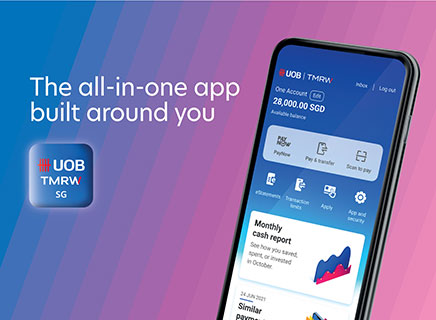
For extra precaution, you can access UOB TMRW anytime to manage your payment limits, block cards instantly, and receive alerts for any unauthorised transactions.
Popular cashless payment methods among Singapore travellers
Based on 2025 ACSS data, consumers typically use 2 to 3 payment methods during overseas trips. The most popular overseas cashless payment methods among Singapore residents include:
- Credit and debit cards – Preferred by 50% of those who spent on an overseas trip in the past year, these remain the most versatile and widely accepted. Credit and debit cards are a favourite due to their added rewards like miles and cashbacks. Travellers are also using e-wallets or mobile wallets like Apple Pay and Google Pay, which are linked to their preferred cards. Such payments remain popular with 34% of travellers valuing the tap-and-pay convenience and biometric security.
- Multi-currency cards and digital wallets – Such payment methods offer competitive exchange rates and support multiple currencies. Moreover, multi-currency cards and digital wallets allow you the flexibility to convert, hold and manage different foreign currencies. When users spend in a supported currency, funds are debited from that particular currency wallet or account.
The main advantage of multi-currency cards is that unlike credit or debit cards, they allow you to lock in today’s rates for tomorrow’s spending. For example, the Japanese Yen (JPY) weakened to a record low of around 120 JPY against the Singapore Dollar (SGD) in July 2024. With a multi-currency card, you could have bought JPY then at a favourable rate for travel later.
- QR payments – For regional destinations such as Malaysia, Thailand and Indonesia, spending has become even more seamless with cross-border QR code payments, as preferred by 12% of travellers. Launched in the past two years, this feature allows travellers to scan and pay at participating merchants using their banking apps.
UOB FX+: More than a travel wallet, an all-in-one debit card for global spending
UOB FX+ stands out from the crowd by offering the best of both worlds. You enjoy 0% FX fees on worldwide spending and the flexibility to convert 9 foreign currencies in advance at exceptional rates. As a bonus, you can earn S$5 cashback on the first four overseas ATM withdrawals (T&Cs apply).
You can also customise your spending experience on UOB TMRW. Set alerts for your preferred rates with the “Alert” function, or use “Convert and alert” to automatically convert and notify you when your desired rates are met. This way, you never miss the chance to lock in your preferred rates for your travel spending.
Find out more: UOB FX+ Debit Card – Multicurrency Debit Card | 0% FX Fees | UOB Singapore
This publication is intended for general informational purposes only and does not constitute financial advice. Please seek independent advice before making any financial decisions.
The features, benefits, and terms of UOB FX+ and other UOB products or services mentioned in this publication are accurate only as at the time of publication. United Overseas Bank Limited (“UOB”) and its employees, offices, and directors, are under no obligation to update this publication if any product features, terms, or conditions change in the future.
All UOB products and services are governed by their respective and prevailing terms and conditions, which may be amended from time to time at UOB’s discretion. For the most current and complete information, please refer to the official UOB webpage for the relevant product or service.
Neither UOB nor any of its employees, offices, or directors makes any warranty or representation, whether express or implied, regarding the accuracy, adequacy, completeness, or reasonableness of the information contained in this publication. UOB and its related parties shall not be liable for any loss or damage arising from reliance on information stated in this publication.