

Exhibitions
"A work of art that did not begin in emotions is not art."
- Paul Cézanne
UOB Art Showcase, Singapore
With the establishment of the UOB Artist Alumni Network (AAN), our goal is to
bring our artists and their works closer to the wider community. By expanding their presence beyond
traditional platforms, AAN enhances artists’ visibility, fosters meaningful collaborations, and
strengthens their engagement within Singapore’s vibrant art ecosystem.
AAN remains dedicated to supporting the ongoing growth of winning artists from the UOB Painting of the Year (POY) and UOB Art in Ink Awards (AIIA). Through curated platforms and development opportunities, we aim to empower these artists in advancing both their artistic practice and their professional careers.
AAN remains dedicated to supporting the ongoing growth of winning artists from the UOB Painting of the Year (POY) and UOB Art in Ink Awards (AIIA). Through curated platforms and development opportunities, we aim to empower these artists in advancing both their artistic practice and their professional careers.
2026 UOB Painting of the Year Regional Winners’ Showcase
From 1 November 2026 to 31 January 2027, 10am to 7pm daily
National Gallery Singapore, Level B1, Supreme Court Wing, Concourse Gallery
Art plays an important role in our lives, touching hearts and connecting communities. That is why for over 40 years, we have committed to uncovering and to nurturing generations of great Southeast Asian artists in this region, illuminating their passion and realising their dreams.
Congratulations to all the 2026 UOB Painting of the Year winners. As the leading patron of the arts in Asia, we will continue to do right by the art community as we foster a thriving art scene with our winning artists and esteemed partners in this region.
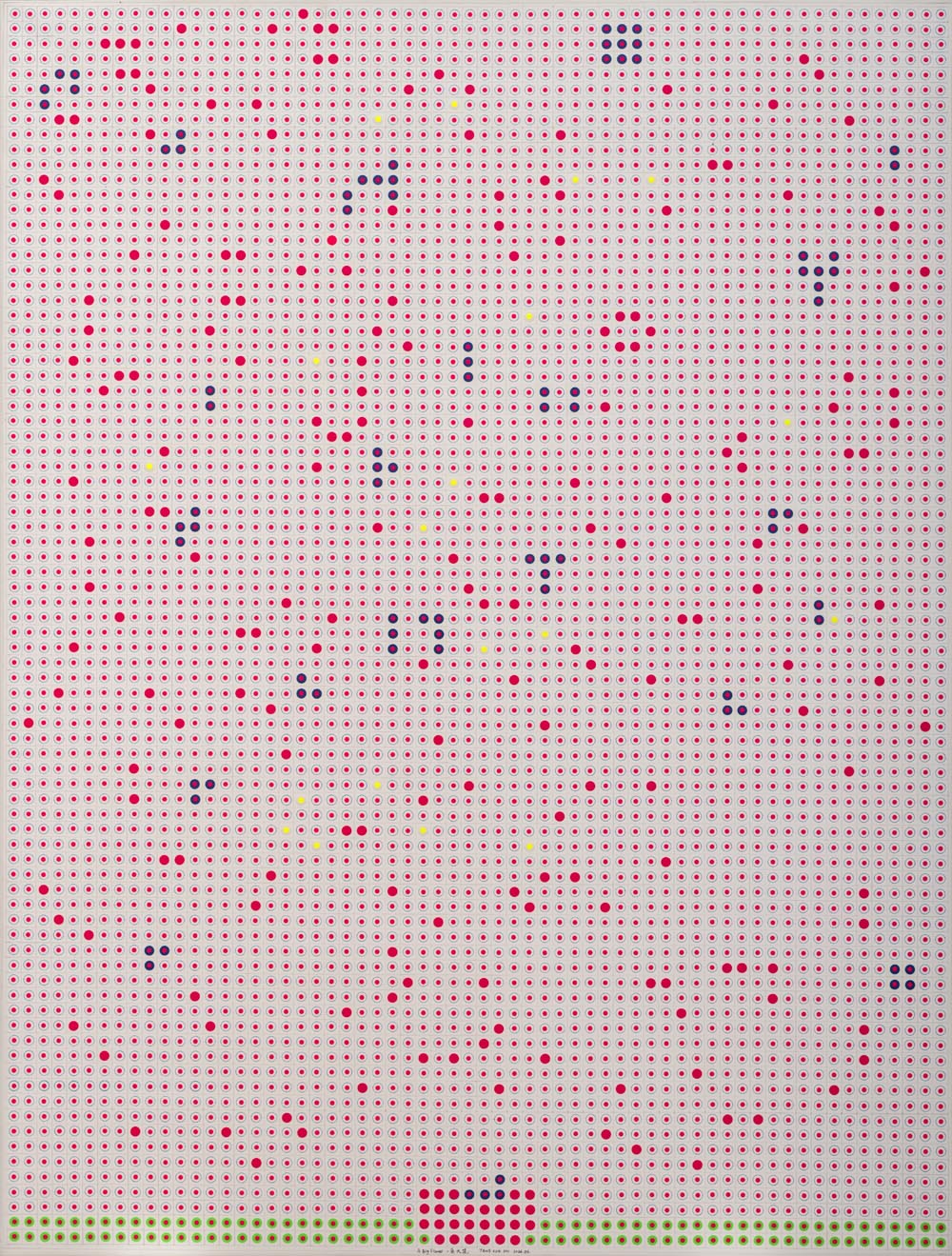
A Big Flower
2026 UOB Painting of the Year, Singapore
Tang Kok Soo
2026 UOB Southeast Asian Painting of the Year,
2026 UOB Painting of the Year, Singapore
A Big Flower
Tang Kok Soo
A Big Flower explores the relationship between centre and deviation, reality and illusion.
When the mind is focused, it finds a centre; when it wanders, it deviates. Yet both remain within
the same frame and belong to the same whole. The centre represents what is real, while deviation
reflects change and perception. From the centre heart emerges light, forming a halo that radiates
outward. Repetition, a hidden nature found in all art forms, becomes the foundation of this work.
Tang Kok Soo
Rendered primarily in pink, the artwork suggests a flower of immeasurable scale rising from a single flowerpot. Two bands of cyan-green at the base create depth and spatial layering, while deep blue, crimson, and yellow dots mark moments of perception and movement away from the centre. Though they deviate, they remain within the underlying structure. The boundless form of the flower echoes Chapter 41 of “道德經 (Dao De Jing)”: "The largest square has no corners," expressing the idea that the greatest forms transcend fixed definition.
The work emerged from the artist’s ongoing exploration of geometric structures and grids. In 2021, after encountering the works and writings of Agnes Martin, the artist recognised the regular grid and realised that irregular grids had long existed throughout his own practice. This led to a year-and-a-half exploration of grid structures, during which he came to understand the grid as a form of meditative painting. Through dense repetition, the creative process resembles a mind repeatedly returning to a single point of attention, generating a sense of energy, vitality, and light. Martin's statement, "My work is about light," encouraged him to look beyond his established methods and reflect more deeply on the inner, spiritual, and psychological dimensions of artistic practice.
In recent years, the artist’s focus has shifted from the grid itself to the cells within the grid and the movement of points inside them. The discovery of variations in the centre point within these cells became the foundation for A Big Flower. Composed of countless loving hearts, each radiating its own halo, the flower becomes an endless field of light, energy, and unity, expressing the inseparable relationship between centre and deviation, structure and freedom, stillness and change.
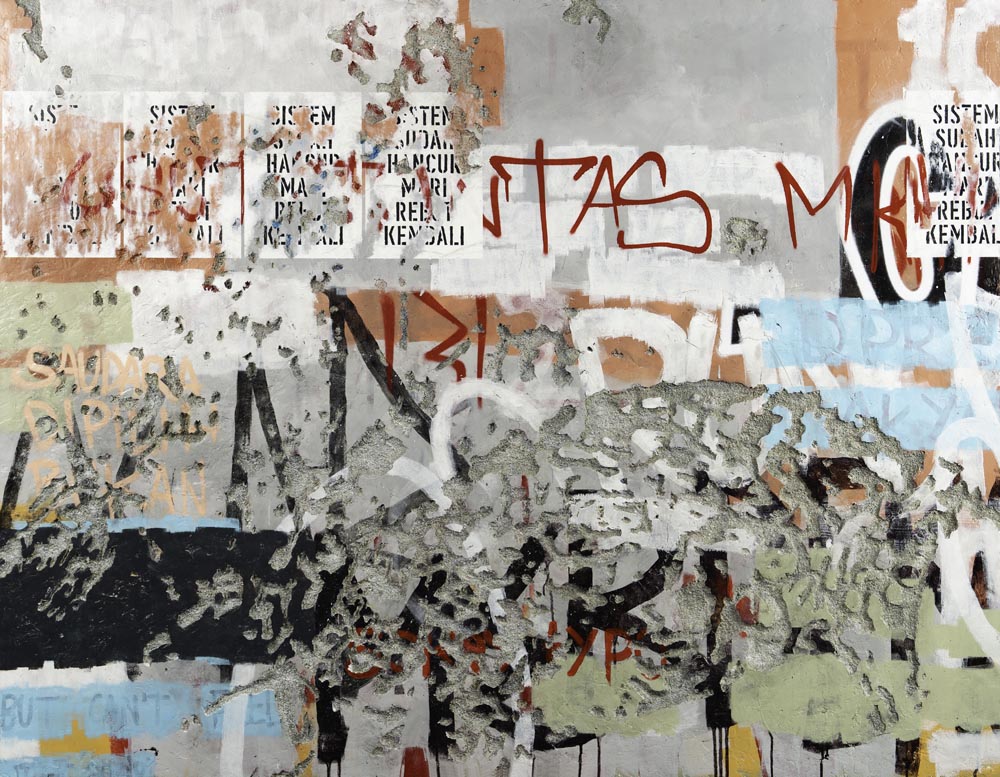
Urban Realism Layers
2026 UOB Painting of the Year, Indonesia
Begok Oner
2026 UOB Painting of the Year, Indonesia
Urban Realism Layers
Begok Oner
Urban Realism Layers races the marks of human existence, connecting the graffiti-covered
walls of contemporary cities with the ancient cave paintings found in Sulawesi, Indonesia, and
Europe. Rather than merely representing a wall, the artist physically constructs one using acrylic
paint, spray paint, cement and Styrofoam, creating a textured surface that evokes the presence of
the urban environment. Begok Oner
Across the layered façade, the artist carves imagery inspired by ancient rock art, blurring the boundaries between graffiti, image and archaeological trace. By drawing parallels between past and present forms of visual expression, the work reflects on humanity’s timeless desire to be seen, remembered and leave evidence of its existence across generations.
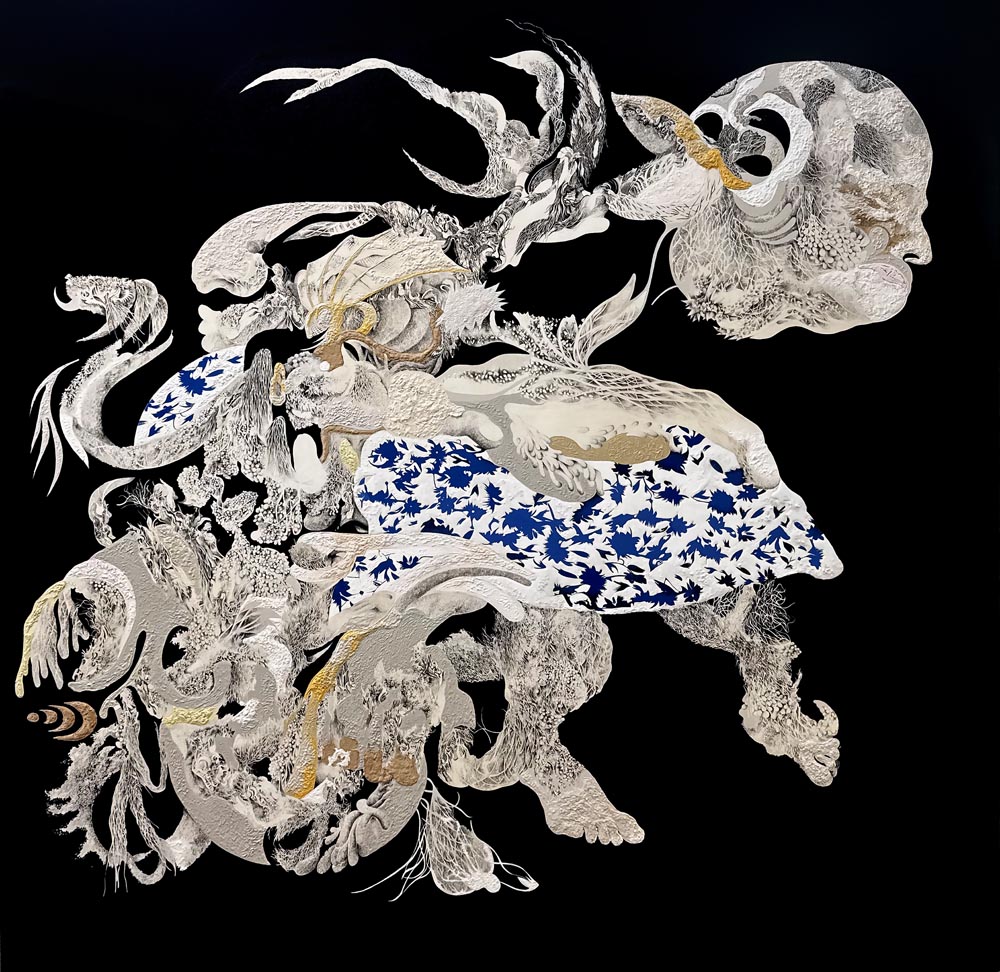
She Waited
2026 UOB Painting of the Year, Malaysia
Lim Tong Xin
2026 UOB Painting of the Year, Malaysia
She Waited
Lim Tong Xin
She Waited reflects the artist's grandmother's final year of life, exploring the fragility
of the human body and the enduring presence of love. The figure portrays the artist's grandmother
seated in a washroom, waiting for her daughter to help bathe her. This intimate scene reveals the
vulnerability of a woman who spent her life caring for others, only to become dependent on the
hands of those she once nurtured. The blue-and-white shirt she wears, a gift from the artist,
becomes a poignant symbol of connection, care and remembrance. Lim Tong Xin
Her distorted body merges with the forms of a bodhisattva, a Buddhist embodiment of compassion and spiritual awakening, and a demonic growth, evoking the coexistence of grace and suffering within the human experience. Intricate black-and-white lines map the transformation of her body through illness, while rough, textured surfaces convey the emotional and physical burdens borne by both the individual and the family. The artwork's pale yellow and muted palette draws from the artist's memory of collecting her grandmother's bones after cremation, evoking the traces and remnants left behind by a life that has passed.
Shortly after the artist returned from an overseas exhibition, her grandmother passed away. She Waited becomes a meditation on the many forms of waiting: waiting for care, waiting for reunion, waiting between life and death, and ultimately, waiting to let go.
Though the body fades, love endures.
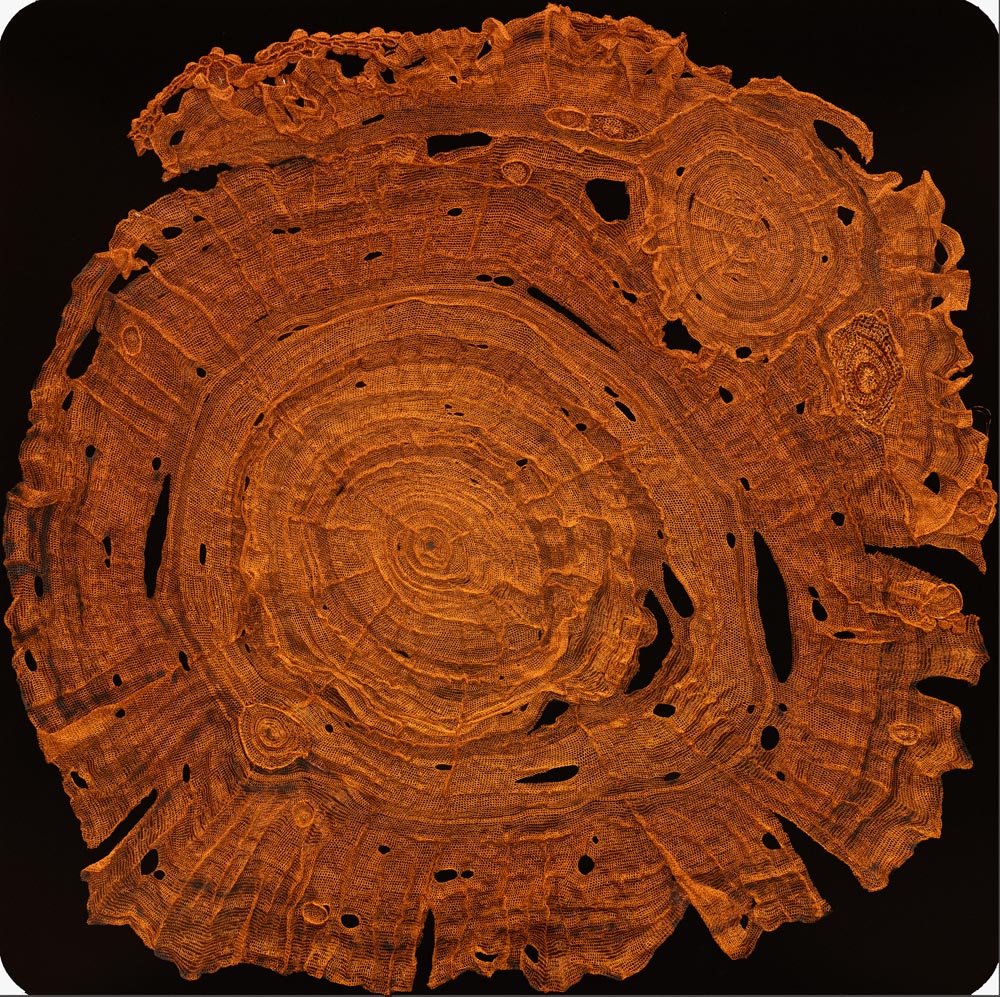
Memories From the Forest
2026 UOB Painting of the Year, Thailand
Weerapong Sansomporn
2026 UOB Painting of the Year, Thailand
Memories From the Forest
Weerapong Sansomporn
Memories From the Forest gathers fragments of the natural world that linger in memory long after the landscape itself has changed. Inspired by the rings, cracks, gaps and weathered surfaces of trees, marks that quietly record growth, loss and the passage of time. The artwork reimagines the structure of a tree through intricately woven copper wire. In the artist’s hands, a material associated with strength and permanence is transformed into something unexpectedly delicate, its woven surface seeming to breathe with vulnerability and grace. Weerapong Sansomporn
The slow, repetitive rhythm of weaving becomes an act of keeping time, echoing nature’s own cycles of emergence, existence and disappearance. Each strand accumulates like a memory, while openings within the structure become spaces of presence and absence, holding recollections that are at once vivid and fading. Rather than portraying a single tree, Memories From the Forest evokes the enduring traces that forests leave behind in the mind and body, reflecting on how nature persists through remembrance even as the physical world continues to shift, erode and renew itself.
Life, Death and Neon
2026 UOB Painting of the Year, Vietnam
Le The Lam
2026 UOB Painting of the Year, Vietnam
Life, Death and Neon
Le The Lam
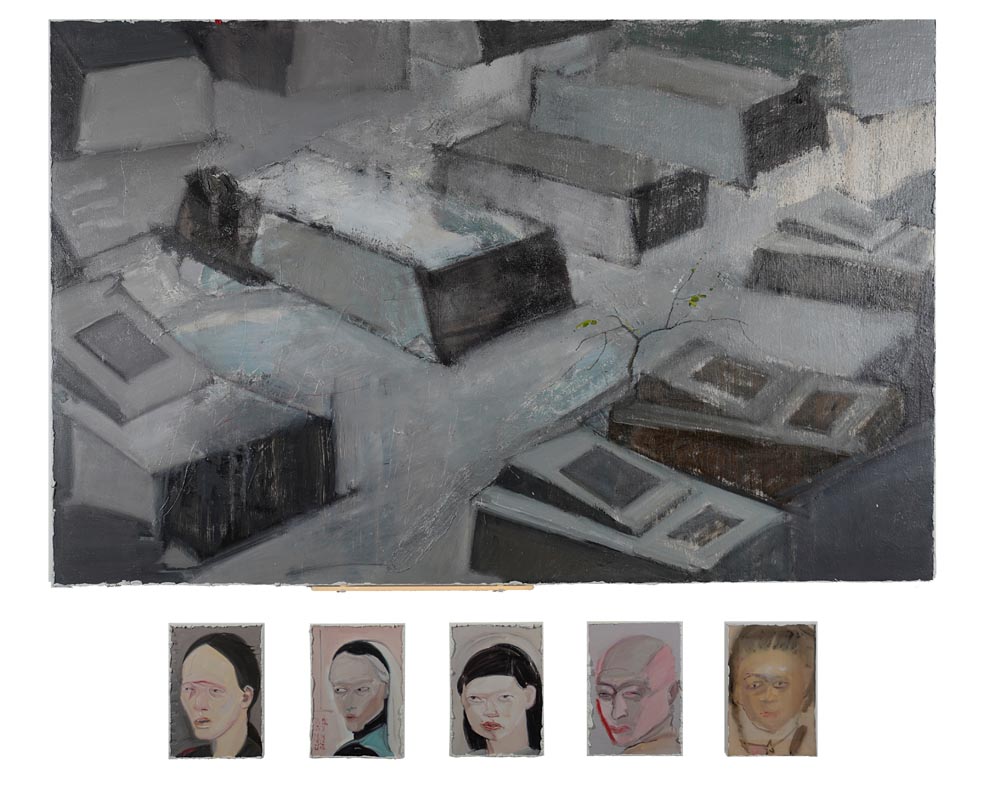
Life, Death and Neon presents a haunting, aerial view of heavy, near-monochromatic architectural forms that appear suspended between landscape, ruin, and memory. Rendered in muted greys and soft washes of paint, the layered structures create an ambiguous, atmospheric space that resists fixed interpretation. Le The Lam
Below, five small portraits are painted with a fragile immediacy, their delicate surfaces standing in marked contrast to the weight and scale of the forms above. A strip of neon light separates the two zones, signalling both an intrusion of the contemporary world into a realm of recollection and a threshold between human presence and an increasingly abstract environment.
Through contrasts of scale, texture, and tonal density, the work establishes a tension between permanence and transience, materiality and remembrance. The indistinct architecture and elusive faces evoke the ways memory fragments, fades and persists, inviting reflection on life, death and the uncertain boundaries between the remembered and the forgotten.
Liminal Fragment 03
Most Promising Artist of the Year, Indonesia
Alif Lamra
Most Promising Artist of the Year, Indonesia
Liminal Fragment 03
Alif Lamra
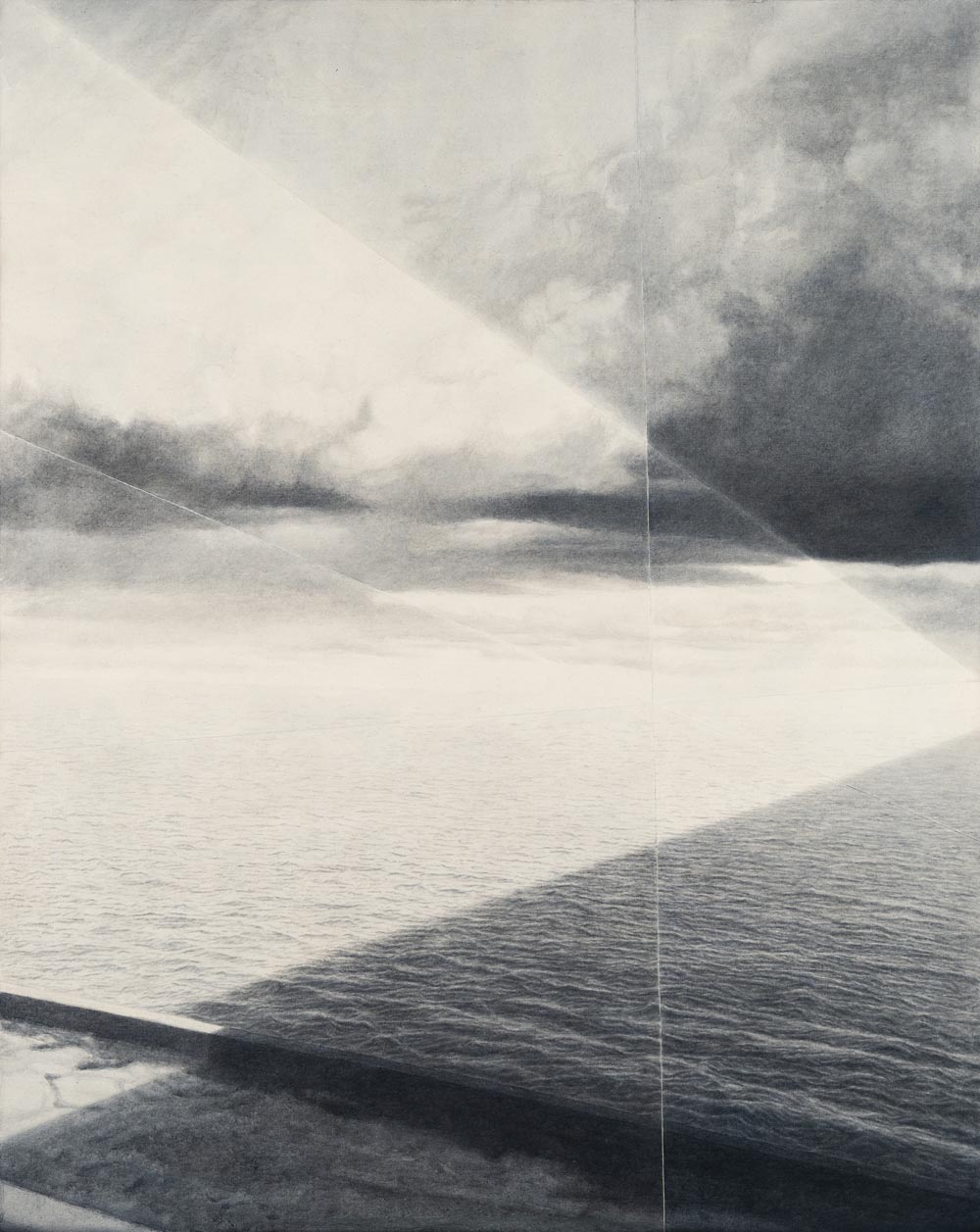
Liminal Fragment 03 is not a literal depiction of the sky or the sea, although it may initially appear so. Instead, the artist presents a perception, suggesting that much of what we see is shaped not only by what lies before our eyes, but also by what resides within us. Alif Lamra
The title refers to a liminal space suspended between certainty and ambiguity. The sharp linear traces that traverse the canvas are not painted but created through a process in which threads are attached to the surface and later removed, leaving behind subtle imprints. This delicate intervention reinforces the painting’s intentional ambiguity, inviting viewers to navigate the space between appearance and interpretation.
Matriarch
Most Promising Artist of the Year, Malaysia
Harpreet Kaur
Most Promising Artist of the Year, Malaysia
Matriarch
Harpreet Kaur
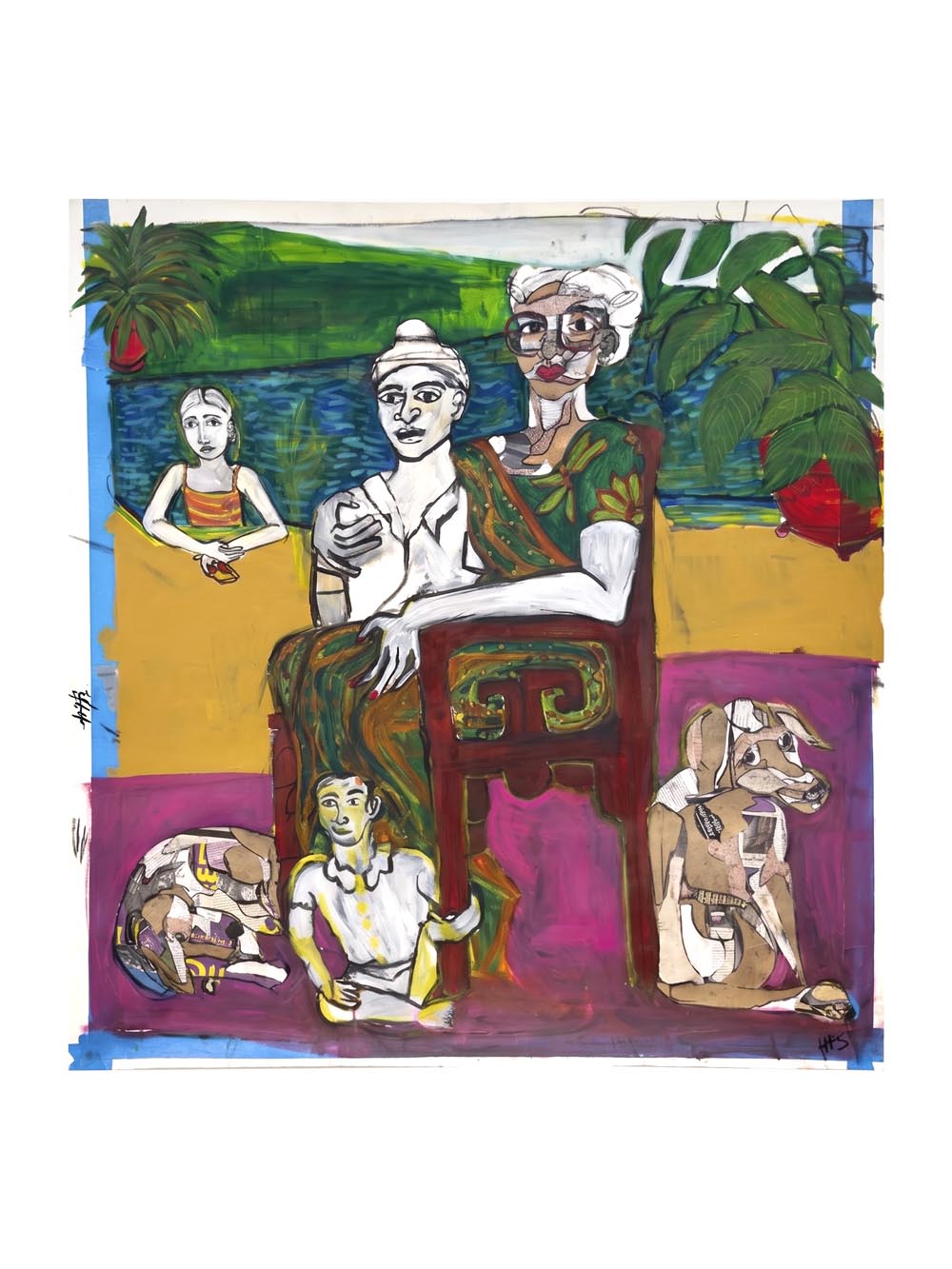
Matriarch is part of an ongoing series that explores post-colonial diasporas, focusing on the experiences of the Malaysian Sikh community across generations. Through expansive dreamlike compositions, the artist brings together ancestors, cultural symbols, personal memories and imagined futures, creating layered narratives that traverse time and place. Harpreet Kaur
Began in 2025, the series draws upon family histories, lived experiences and historical research to examine themes of displacement, identity, belonging, resilience, and the evolving meaning of home. In Matriarch, a family with migrant roots gathers in a space of comfort and companionship, resting alongside their beloved pet dogs. Central to the composition is a swimming pool, inspired by public pools that were desegregated during the American Civil Rights Movement of the 1960s. Here, the pool is transformed into a metaphorical space suspended between freedom and belonging, reflecting the ongoing negotiation of identity, community and joy.
A Baba Nyonya antique chair from Melaka anchors the scene in cultural heritage and familial memory, while the dogs, cherished members of the family, subtly allude to the precariousness of existence under social and political systems shaped by human authority. Set against broader histories of migration, exclusion and survival, these elements are reimagined through moments of beauty, abundance and togetherness, celebrating resilience and honouring the enduring presence of the community across generations.
Echoes of Belongings
Most Promising Artist of the Year, Singapore
Wong Yik Knee
Most Promising Artist of the Year, Singapore
Echoes of Belongings
Wong Yik Knee
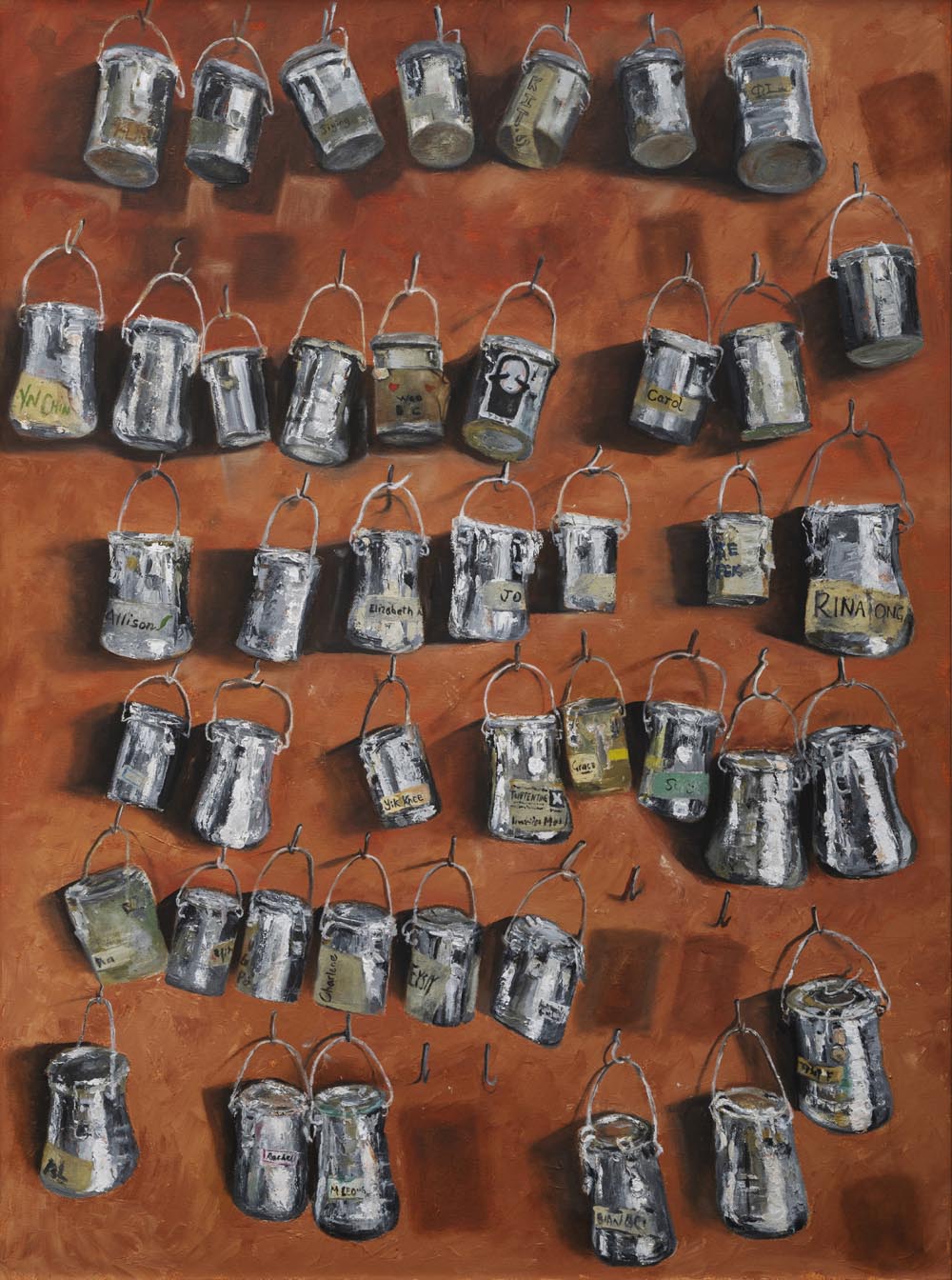
Echoes of Belongings reflects on the stories, memories and traces embedded within everyday objects. Composed of a collection of worn containers marked with individual names, the work transforms ordinary possessions into quiet records of human presence. Each container bears the marks of use and time, revealing a unique history while simultaneously belonging to a larger community of shared experiences. Wong Yik Knee
The title speaks to both memory and connection. "Echoes" suggests the lingering traces of lives lived, relationships formed and moments remembered, while "Belongings" refers not only to the objects themselves but also to the human desire for identity, place, and belonging. The names inscribed on the containers become reminders that every object carries a personal story, inviting viewers to consider the lives they once accompanied.
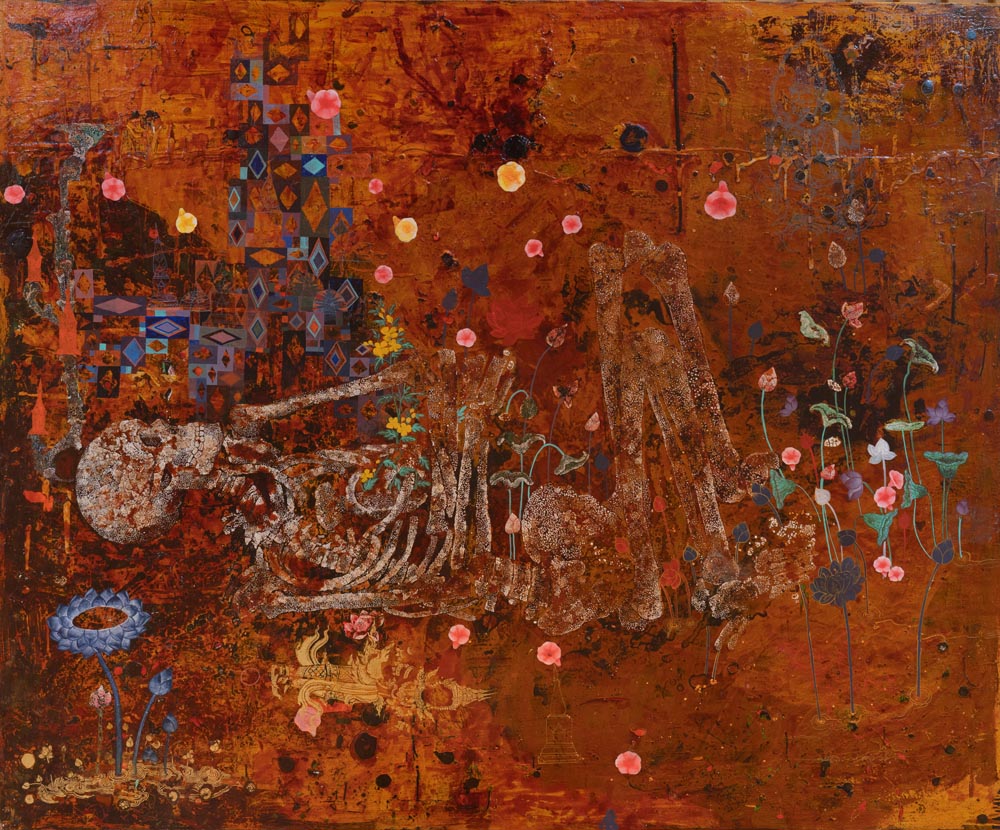
Life is Impermanent, but Death is Certain
Most Promising Artist of the Year, Thailand
Watcharaphong Seethiang
Most Promising Artist of the Year, Thailand
Life is Impermanent, but Death is Certain
Watcharaphong Seethiang
Life is Impermanent, but Death is Certain emerges from a period of grief and quiet reflection, contemplating the fragile and transient nature of existence. Drawing inspiration from Buddhist teachings on the contemplation of the body and the practice of maranasati, or mindfulness of death, the work invites a deeper awareness of life’s fleeting passage. Rather than dwelling on mortality as an ending, it approaches death as an inseparable part of the natural cycle through which all living things arise, change and pass away. Watcharaphong Seethiang
Through a restrained and contemplative visual language, the painting becomes a space of stillness and introspection. It encourages viewers to pause, reflect and recognise the preciousness of the present moment. In acknowledging the inevitability of impermanence, Life is Impermanent, but Death is Certain a gentle reminder to value life more fully, finding meaning in its fragility and beauty within the continuous rhythm of transformation.
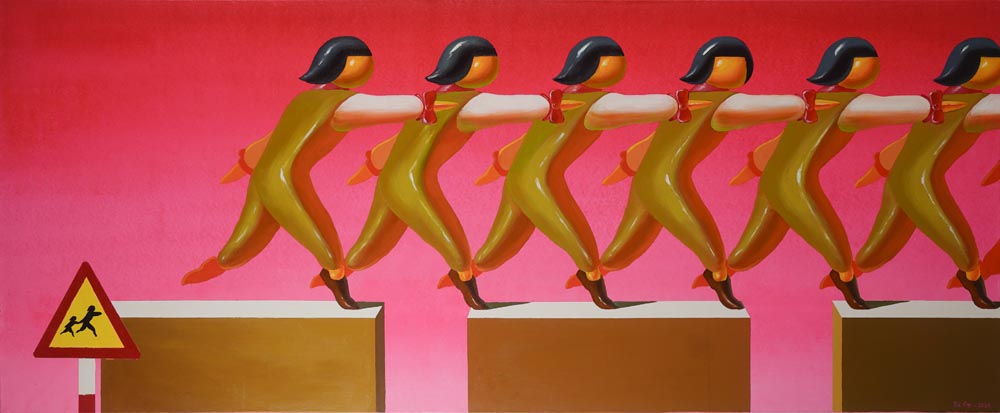
Ahead – “Slow Down"
Most Promising Artist of the Year, Vietnam
Nguyen Ba Dat
Most Promising Artist of the Year, Vietnam
Ahead – “Slow Down"
Nguyen Ba Dat
Ahead – “Slow Down” depicts a crowd of polished, near-identical figures against a striking neon pink backdrop, each extending an arm in the same direction. A sign reinforces the routine of their movement, suggesting a world governed by habit, conformity and collective momentum. Amid this uniformity, however, one figure subtly breaks ranks, turning its head to the right. Nguyen Ba Dat
The artwork reflects conformity, habitual ways of living and the loss of individual identity within modern society. The faceless crowd becomes a metaphor for the repetitive systems that shape everyday life. Through artwork, the artist invites viewers to reflect on their own lives: are we living with a sense of purpose and individuality, or have we become merely another repeating cog in the assembly line of the crowd?
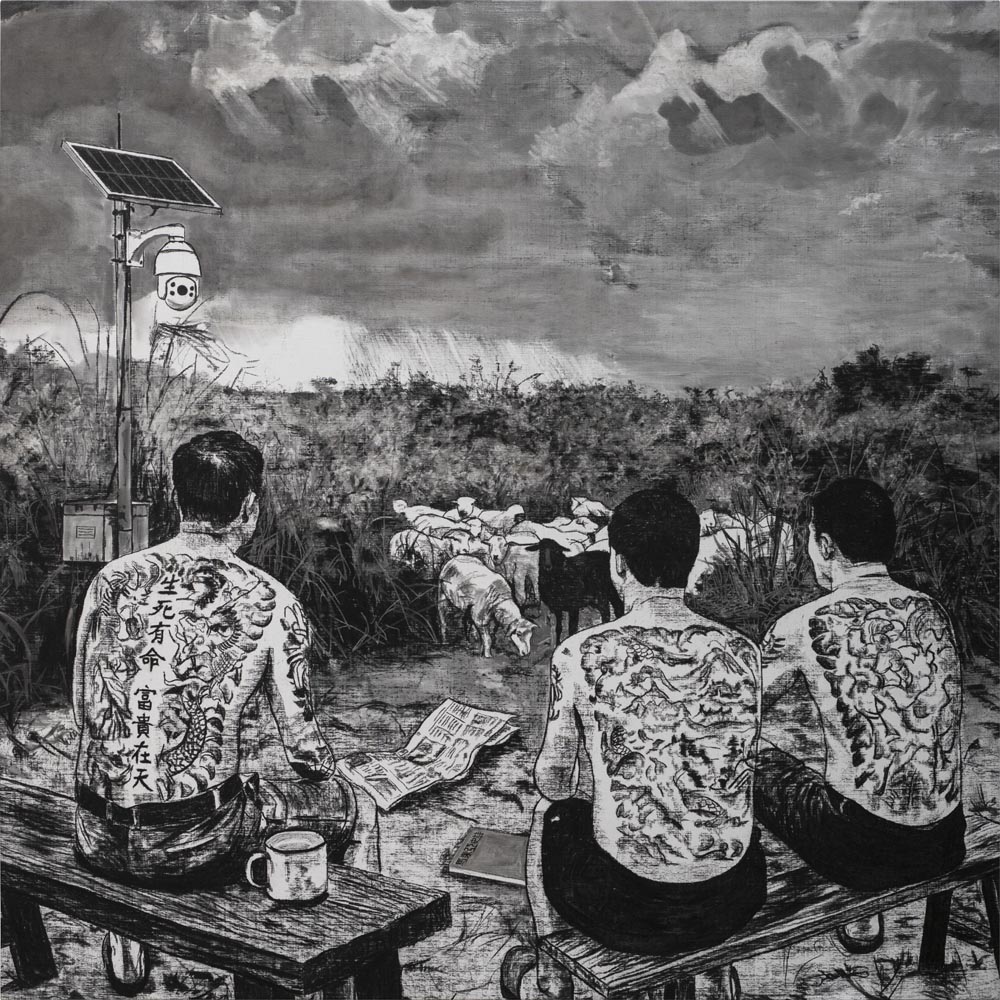
108 Sheep and Counting
Gold Award, Established Artist Category, Singapore
Ezekiel Wong
Gold Award, Established Artist Category, Singapore
108 Sheep and Counting
Ezekiel Wong
108 Sheep and Counting stages a direct conversation with Chua Mia Tee's Epic Poem of Malaya (1955), one of the defining works in Singapore's art history. The composition is reproduced almost in its entirety: the bench, the seated figures, the mug, even the fly resting on a shoulder. Yet while the structure remains familiar, the ideals that animated the original painting have been fundamentally transformed. Ezekiel Wong
Where Chua Mia Tee placed an impassioned orator at the centre of a nation being imagined into existence, the artist replaces him with an open pasture and a CCTV camera. The figures who remain are aging veterans of street brotherhood, men who once found identity, loyalty and belonging within a code that Singapore's modern narrative has largely relegated to the margins. They are no longer witnesses to a future being built. Instead, they sit watching sheep.
The title operates as both image and code. The number 108 refers to a secret society brotherhood, while the sheep evoke the symbolism of the herd. Together, they chart a bittersweet transformation: the lions of the past rendered as the black sheep of the present, seated within the framework of an epic whose original voice has fallen silent.
Executed in charcoal at the scale of a history painting, the work asks what becomes of people and histories that no longer fit the dominant narrative. It reflects on memory, exclusion and belonging, inviting viewers to consider who is remembered, who is forgotten, and who remains carrying the weight of stories that progress has chosen to leave behind.
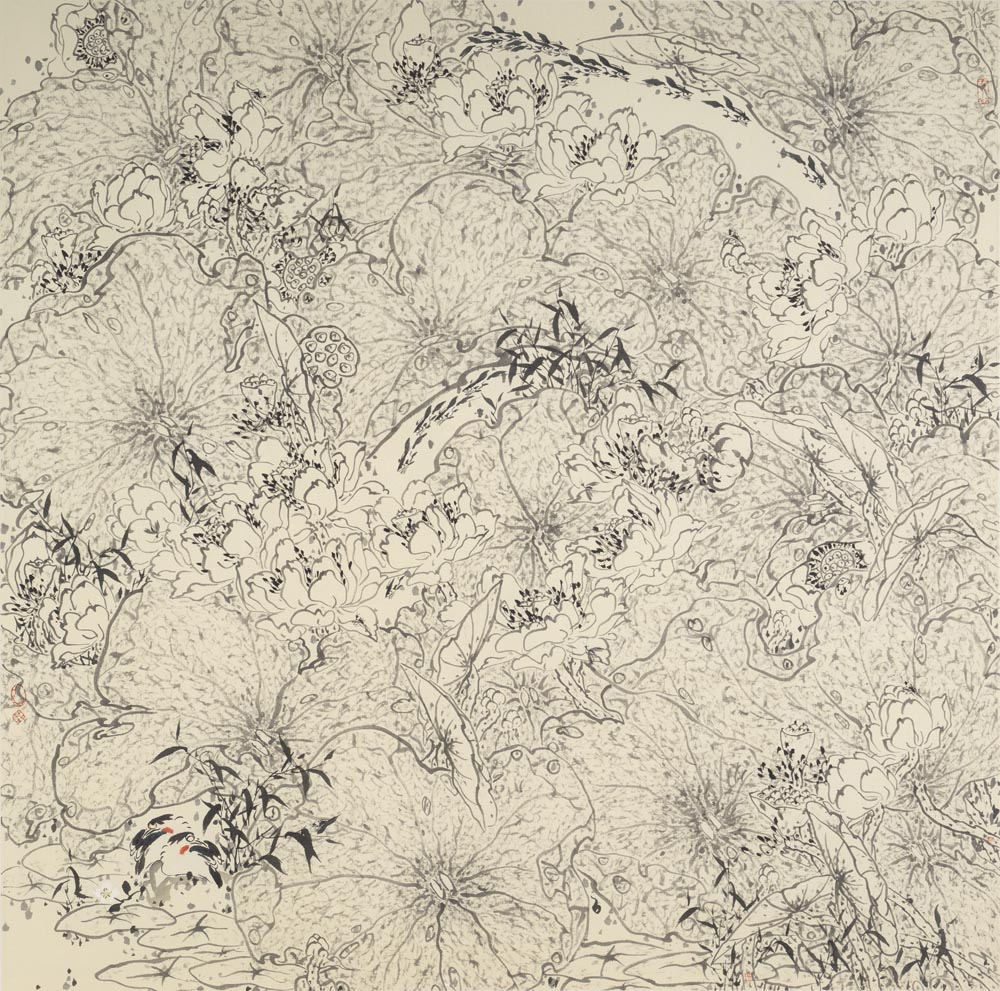
一塘消遥 (A Pond of Freedom)
Silver Award, Established Artist Category, Singapore
Tan Chin Boon
Silver Award, Established Artist Category, Singapore
一塘消遥 (A Pond of Freedom)
Tan Chin Boon
一塘消遥 (A Pond of Freedom) presents the lotus pond not simply as a landscape, but as a living ecosystem where every form of life exists in quiet harmony. Using delicate ink lines rather than colour, the work reveals the subtle rhythms of nature through observation, restraint and attention to detail. Tan Chin Boon
The lotus appears in every stage of its life cycle: tender shoots emerging from the water, broad leaves spreading across the pond, unopened buds, flowers in full bloom and fading flowers returning to the earth. Within a single image, birth, growth, decline and renewal unfold simultaneously, reflecting the continuous cycle of life.
Yet the pond belongs to far more than the lotus. Fishes swim beneath the water's surface, insects drift through the air and wild grasses flourish among the lotus. Each living thing occupies its own place within the ecosystem, not in competition, but in coexistence. Beneath the shelter of the lotus canopy, two birds rest. One sleeps while the other gazes at a tiny wildflower. Whether the bird admires the flower or the flower awaits recognition is left unresolved, inviting viewers to bring their own reflections to the scene.
Hidden within the pond is a tadpole, hinting at the presence of many more unseen lives and perhaps a watchful mother beyond the painting’s edge. The artwork reminds us that life often flourishes in places we scarcely notice. Celebrating the resilience and interconnectedness of the wetland environment, 一塘消遥 (A Pond of Freedom) is a meditation on balance, coexistence and the quiet abundance of nature. It invites viewers to pause, set aside the noise of the world, and discover beneath the lotus leaves a sanctuary of stillness, wonder and freedom.
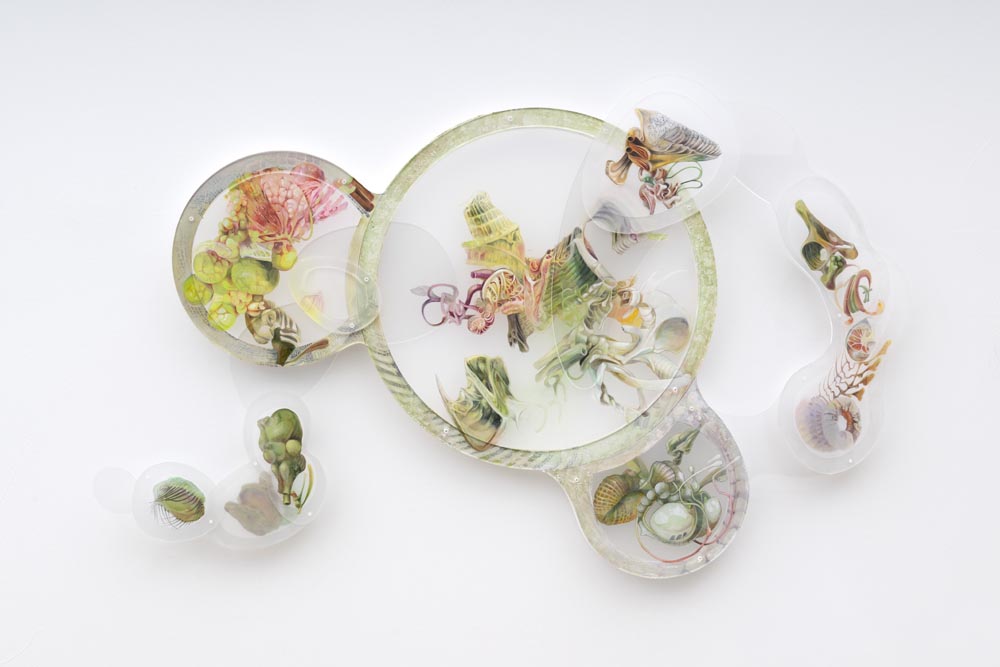
Our Unresolved Plurality
Bronze Award, Established Artist Category, Singapore
Koh Kai Ting
Bronze Award, Established Artist Category, Singapore
Our Unresolved Plurality
Koh Kai Ting
Our Unresolved Plurality examines the impossibility of bodily purity and challenges the notion of the human body as a singular, self-contained entity. Inspired by Donna Haraway's proposition that bodies are ecosystems rather than autonomous individuals, the work reimagines the body as a site of coexistence, shaped through continuous relationships with microorganisms, animals, environments and external systems. Koh Kai Ting
Painted on translucent, membrane-like mesh stretched across branching ovular frames, the artwork evokes budding yeast colonies, microbial blooms, detached organs and embryonic ecosystems suspended in states of continual transformation. The semi-transparent surfaces suggest permeable boundaries, blurring distinctions between inside and outside, self and other.
Across each composition, forms proliferate without a fixed centre or hierarchy, spreading organically through networks of connection and dependency. This visual echoes the human microbiome, where trillions of organisms coexist through unstable negotiation and interdependence.
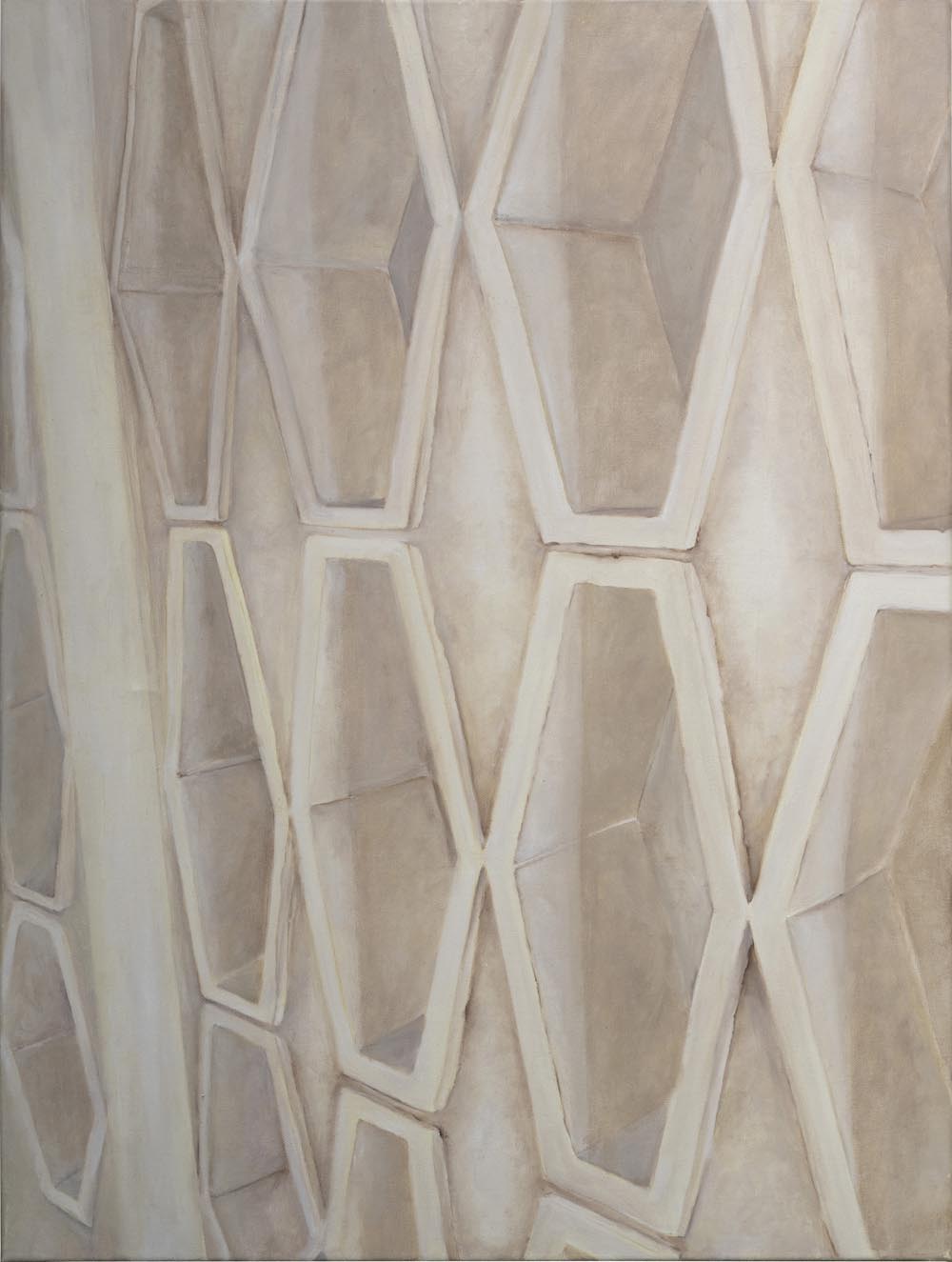
Recesses
Gold Award, Emerging Artist Category, Singapore
Ong Paik Sim
Gold Award, Emerging Artist Category, Singapore
Recesses
Ong Paik Sim
Recesses is a reflection on a beloved parent's changing state of mind and the fragile persistence of memory. As clarity becomes increasingly rare and fleeting, the artwork holds onto the belief that memories, stories and moments of recognition remain hidden within the recesses of the mind, waiting to surface. Ong Paik Sim
The painting speaks to the quiet hope of connection. It reflects the longing for those precious moments when clarity returns and a meaningful, coherent conversation becomes possible once again. Though brief and unpredictable, such moments are deeply cherished, offering comfort, familiarity and grace.
At its heart, Recesses is about love, patience and resilience. It acknowledges the uncertainty of memory while holding onto the possibility that what appears lost may still endure beneath the surface. Through this work, the artist expresses a simple yet enduring hope: that connection remains, and that perhaps, in time, it will reveal itself again.
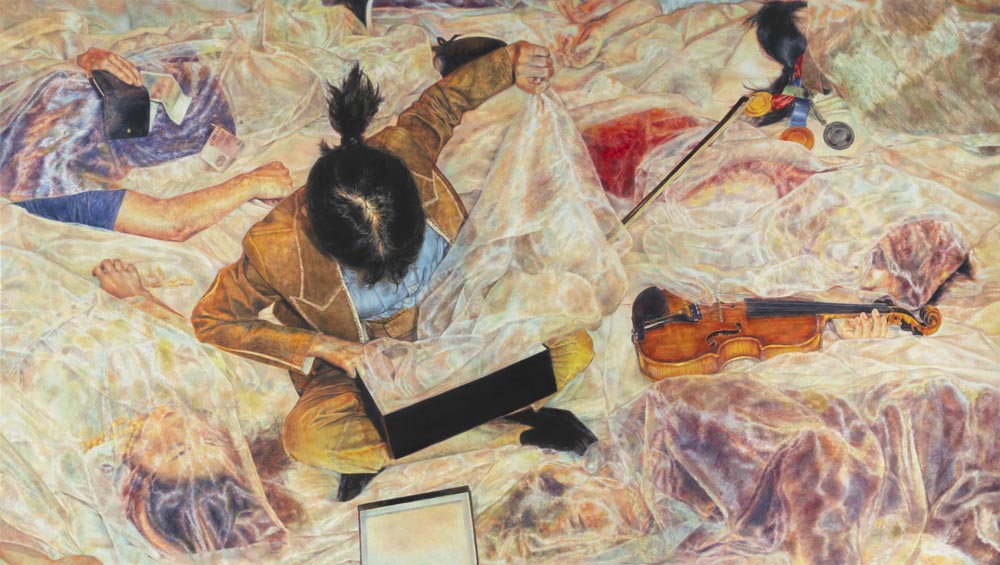
Obsolete?
Silver Award, Emerging Artist Category, Singapore
Camille Eugenie Mabasa Cheng
Silver Award, Emerging Artist Category, Singapore
Obsolete?
Camille Eugenie Mabasa Cheng
Obsolete? questions the meaning of work, achievement and the enduring human desire to leave a mark on the world. In a society that often measures worth through success and productivity, the painting reflects on whether a career is merely a means of survival or a pursuit of achieving excellence. Camille Eugenie Mabasa Cheng
Figures lie entwined beneath translucent fabric, dressed in attire associated with professions through which they have attained prestige and recognition. Among them are a celebrated violin virtuoso, a highly successful technology entrepreneur and a global celebrity admired by millions. Though partially concealed, they remain visible beneath the veil. The fabric cannot fully obscure them, symbolising the legacies they have built and the traces of their lives that endure the test of time.
At the centre of the artwork sits a young girl, detached from the others and caught in a state of uncertainty. Surrounded by disorder, she searches intently through a box, embodying the difficult and often overwhelming journey towards finding purpose, fulfilment and success. Her search is not driven solely by the pursuit of recognition, but by a deeply human need to create meaning and define her place in the world.
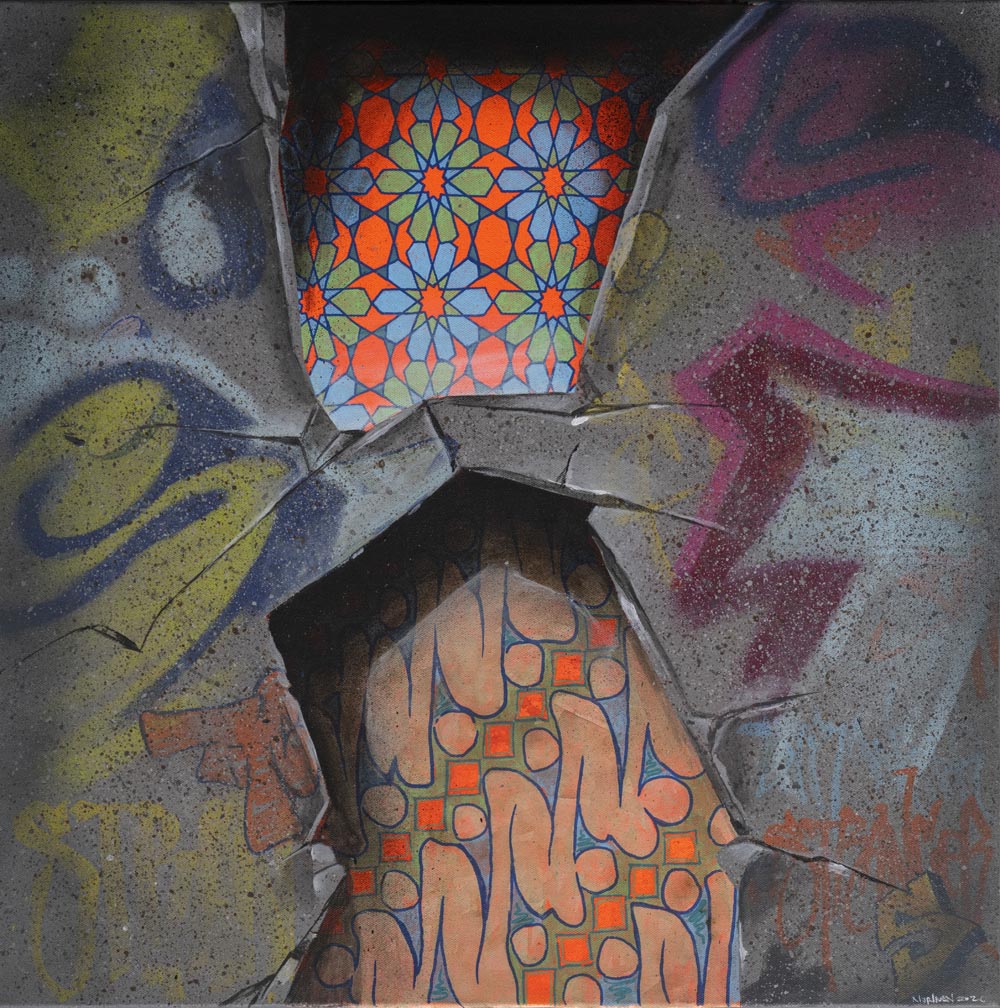
We Can Like Two Different Things
Bronze Award, Emerging Artist Category, Singapore
Nur Iman Bin Sumani
Bronze Award, Emerging Artist Category, Singapore
We Can Like Two Different Things
Nur Iman Bin Sumani
We Can Like Two Different Things reflects on the coexistence of cultural influences and the layered nature of identity. While the artist's visual language is shaped by Western influences, particularly street art and graffiti, the work acknowledges that the ideas, images and traditions we encounter throughout life become part of who we are through exposure, environment and everyday experience. Nur Iman Bin Sumani
Yet new influences do not erase what came before. Beneath these contemporary expressions remain the deeper foundations of culture, faith and personal history that continue to shape the artist’s values and worldview. In this work, identity is not presented as a choice between different influences, but as a space where multiple perspectives can exist together.
For queries, please contact paintingoftheyear@uobgroup.com