You are now reading:
UOB Business Outlook Study 2026 (Vietnam) H1: Confidence rebounds as businesses accelerate AI adoption and ASEAN expansion

Find out how we can help you fast-track your investments in the JS-SEZ.
Learn more
you are in UOB ASEAN Insights


You are now reading:
UOB Business Outlook Study 2026 (Vietnam) H1: Confidence rebounds as businesses accelerate AI adoption and ASEAN expansion
Vietnamese businesses have had to navigate a demanding start to the year. Rising operating costs, regulatory shifts, and geopolitical tensions continue to put pressure on day-to-day operations. Yet the latest findings from the UOB Business Outlook Study suggest something important: confidence has not waned—it has adapted.
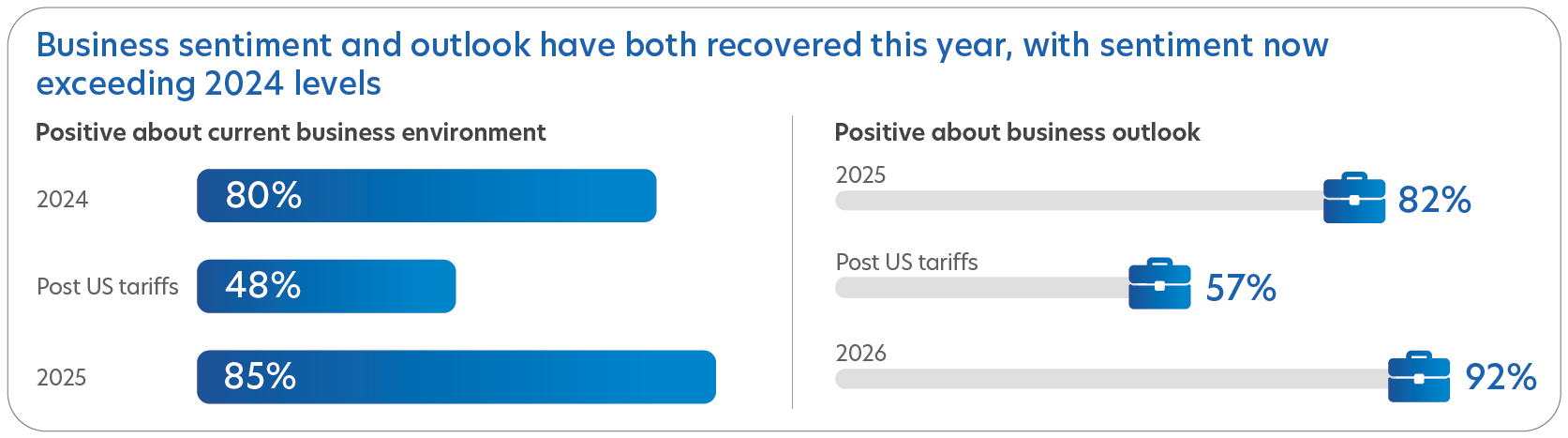
That resilience is evident in Vietnam’s H1 outlook. Business sentiment has rebounded strongly following the shock of the United States (US) tariff developments, with 85 per cent of businesses now viewing the current environment positively, up from 48 per cent during the tariff-impact period.
At the same time, nine in 10 businesses reported revenue growth in 2025, and 92 per cent expect business performance to improve in 2026. Many are also looking beyond short-term recovery, with stronger momentum expected in 2027 and 2028.
Vietnam’s businesses are not standing still. They’re investing in digitalisation, experimenting with artificial intelligence (AI), rethinking supply chains and exploring overseas growth, all while trying to build leaner, more efficient operations.
The operating environment remains challenging. Businesses continue to face higher costs, regulatory changes and uncertainty linked to global geopolitical tensions. These pressures are also shaping priorities for 2026: stronger business efficiency solutions, financial support for rental costs, and better digital infrastructure.
Still, Vietnamese businesses are showing a clear ability to regroup and move forward. Rather than waiting for conditions to improve, many are focusing on what they can control—streamlining processes, strengthening internal capabilities, and investing in areas that can support medium-term growth.
This shift reflects a more mature response to uncertainty. Instead of treating disruption as a temporary setback, businesses are increasingly planning for it as part of the new normal. That mindset is helping firms look for practical ways to protect margins, improve productivity, and stay competitive.
Digital adoption in Vietnam is already high. More than nine in 10 businesses have digitalised at least one function, indicating that digital transformation is now part of mainstream business strategy.
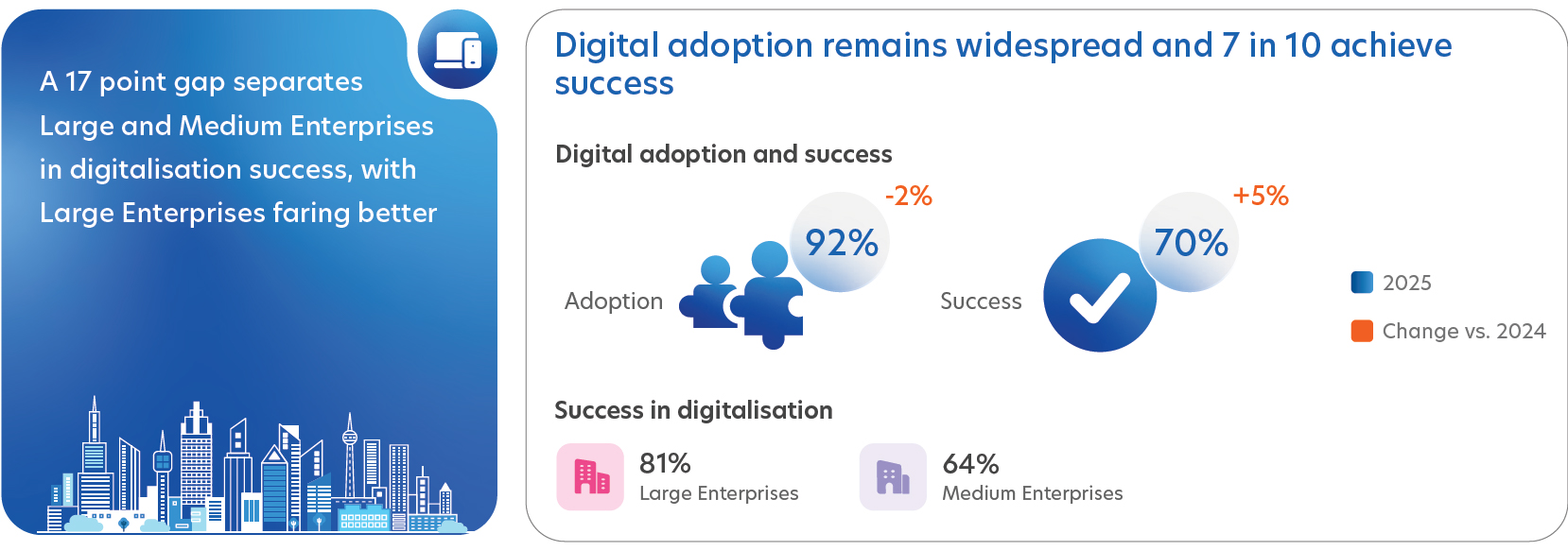
However, adoption alone does not guarantee results. The findings indicate a 17-point gap in digital success between Large Enterprises and Medium Enterprises, highlighting a clear divide in execution and capabilities. Many businesses have started the digital journey, but not all are seeing the same value from it.
Several barriers persist. Cybersecurity concerns remain high, while skills shortages and system integration challenges complicate implementation. For instance, companies may adopt new digital tools across finance, operations, or customer engagement, only to find that those tools do not integrate smoothly with legacy systems or that teams require more training.
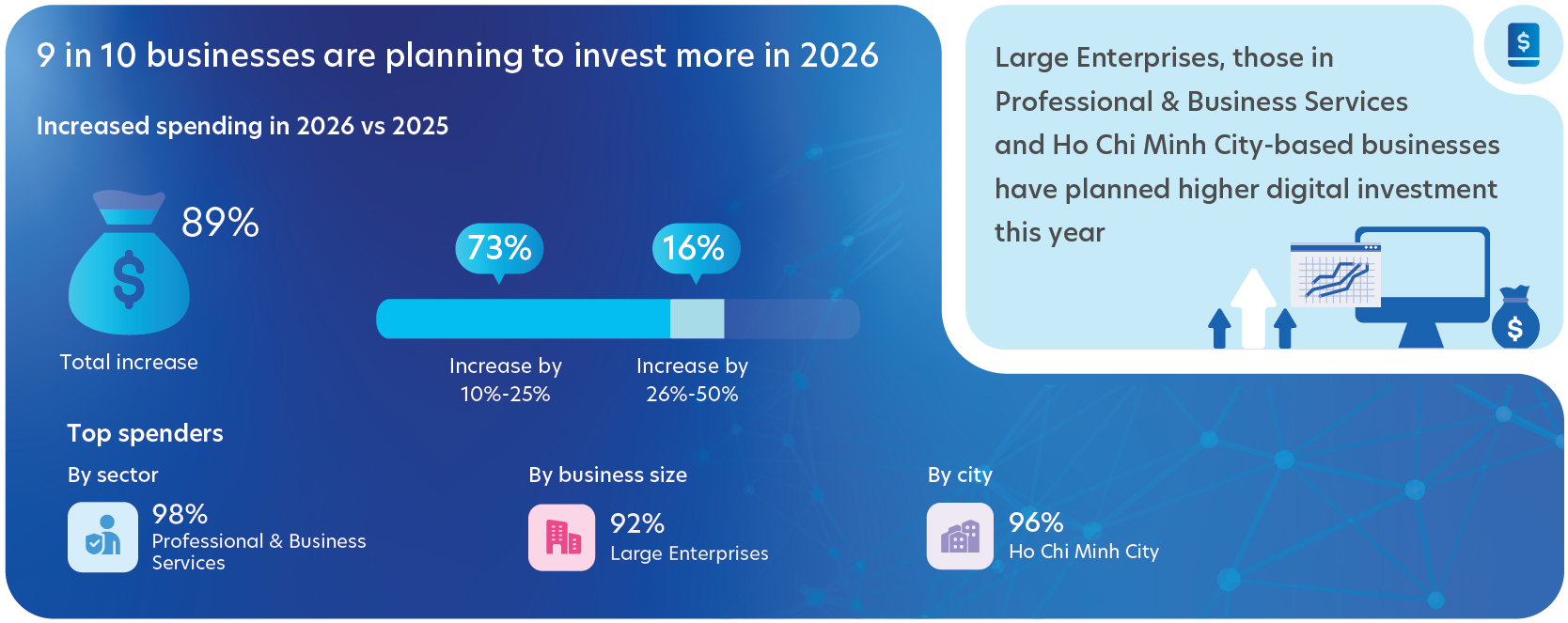
Even so, confidence remains strong. Nine in 10 businesses plan to increase digital investments by 10 to 50 per cent in 2026, underscoring digitalisation as a key driver to productivity and growth.
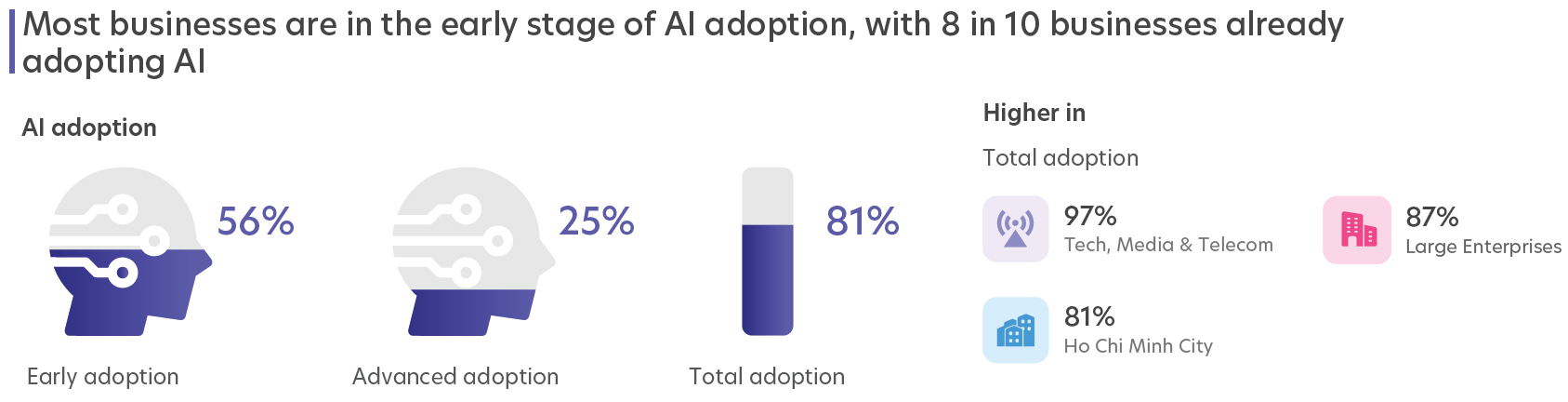
AI adoption is gaining momentum. Eight in 10 businesses in Vietnam have adopted AI, although most are still in the early stages. Adoption is highest among Large Enterprises and firms in the Technology, Media, and Telecom sector, where digital maturity and ecosystem support are typically stronger.
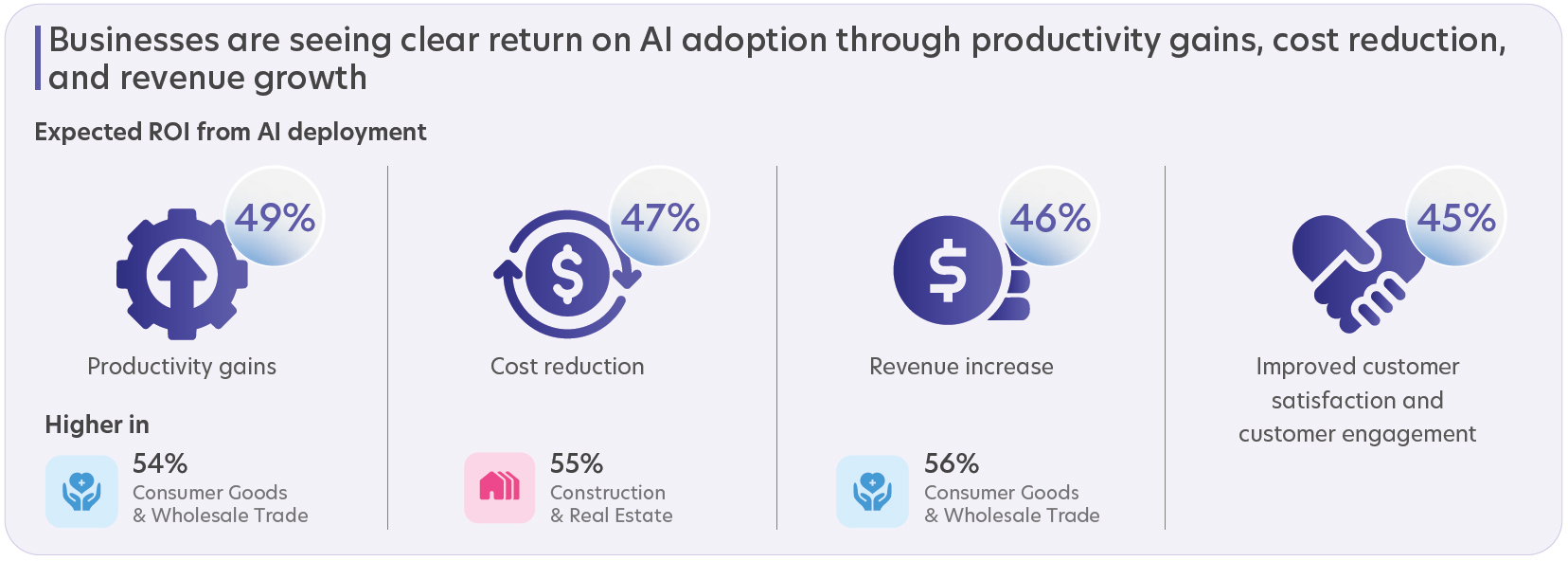
Encouragingly, returns are becoming visible. Businesses report measurable value from AI in three key areas: productivity gains (49%), cost reduction (47%), and revenue growth (46%). These results indicate that AI is moving beyond hype into practical applications with tangible commercial impact.
Confidence is high: two in three businesses plan to increase their AI budgets by more than 25 per cent in 2026. However, challenges remain, including cost constraints, ecosystem readiness, data and system limitations, and regulatory considerations.
The next phase for many firms will focus on where AI can deliver the greatest value—whether by automating workflows, improving demand forecasts, or optimising energy use.
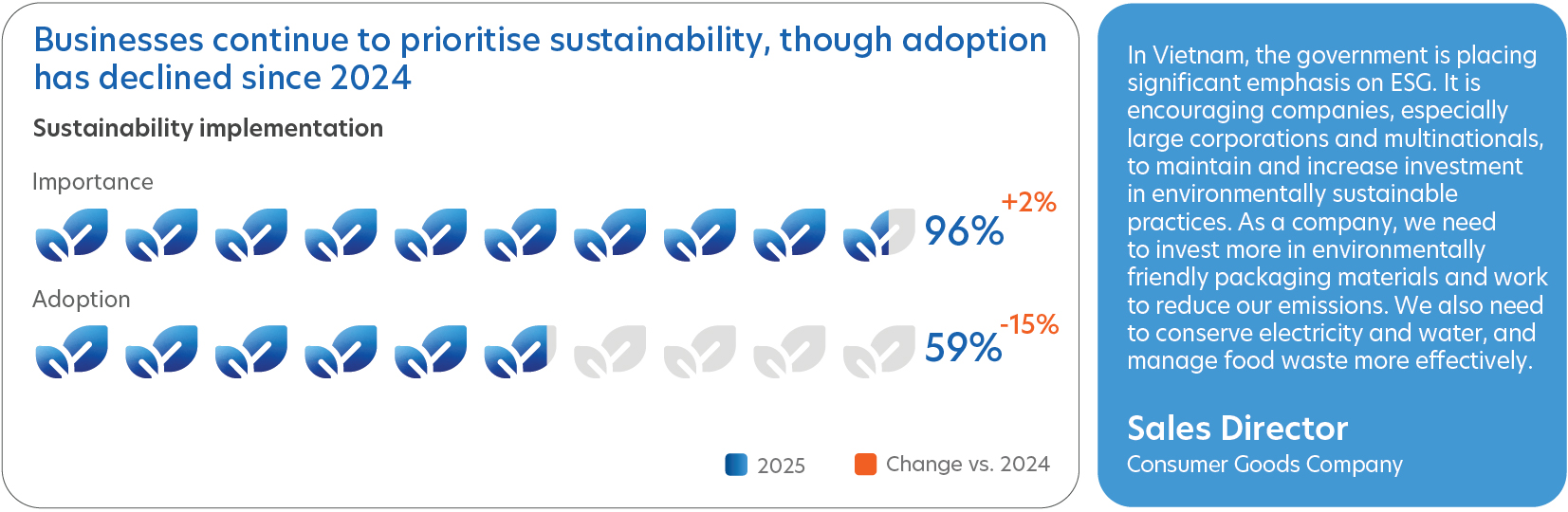
Sustainability remains firmly on the agenda, with 96 percent of businesses saying it is important. However, implementation has declined by 15 points compared to 2024, with only three in five businesses reporting sustainability initiatives in place.
While this does not necessarily signal waning interest, it suggests businesses are becoming more selective and strategic. Businesses increasingly view sustainability through a practical lens—focusing on long-term resilience, meeting multinational partners' expectations, and staying relevant in global value chains, rather than prioritising brand image or investor appeal.
Cost remains a key challenge. Businesses are concerned about passing higher costs on to customers, the possible impact on revenue, and the lack of renewable infrastructure needed to support broader adoption. As a result, the most widely adopted initiatives are those with immediate operational benefits, such as energy efficiency, employee welfare, and waste reduction.
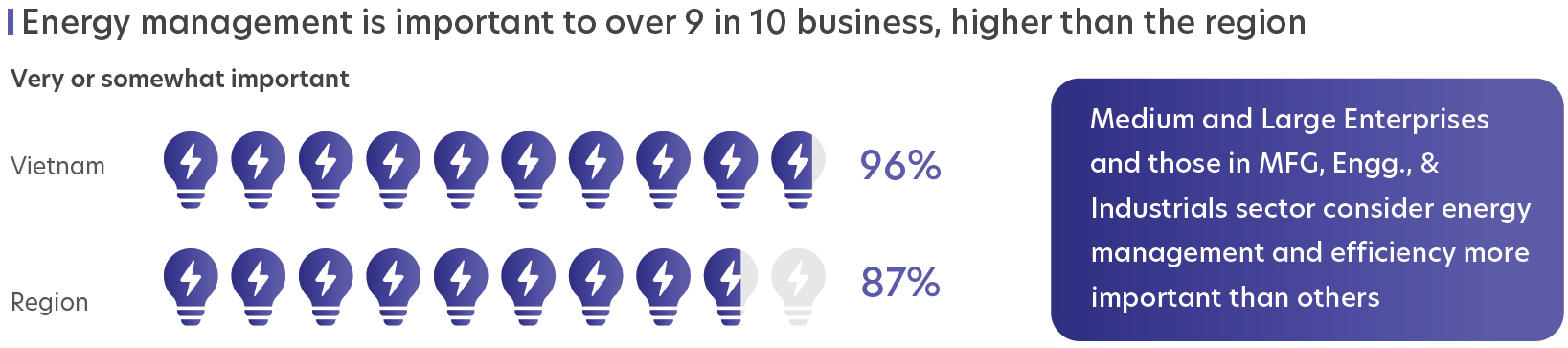
Energy management sits at the intersection of sustainability and efficiency—and urgency is high. Some 96 per cent of businesses rate energy management as important, with top priorities including supply stability, optimising energy usage through digital tools, and reducing consumption.
Businesses are already investing in efficient machinery, solar panels, and AI-based energy optimisation tools. These solutions can help reduce waste, improve equipment performance, and stabilise long-term operating costs.
However, familiar challenges hinder broader adoption: high upfront costs, limited access to reliable vendors, and technical capability gaps. Looking ahead, businesses say their priorities are focused on improving equipment performance, reducing costs, and strengthening corporate reputation.
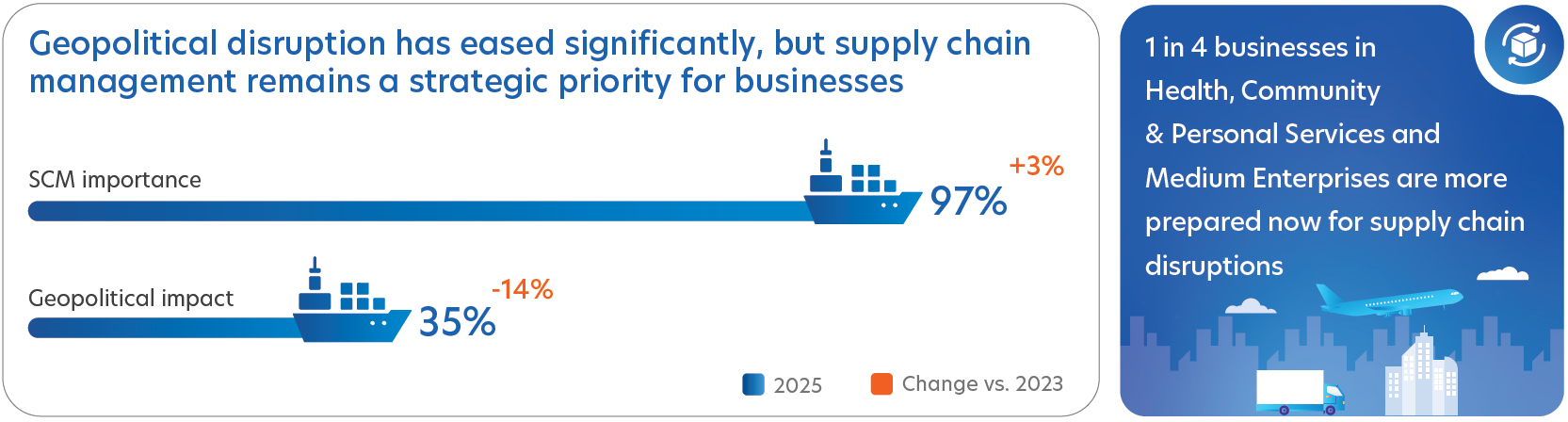
Supply chain management remains critical for Vietnamese businesses, with 97 per cent rating it as important. While only 35 per cent of businesses say they are currently affected by geopolitical supply chain disruptions, planning has become increasingly complex.
Inventory management challenges are intensifying, and 88 per cent say that ambiguity around “Local Content” and “Country of Origin” regulations affects them. Frequent regulatory changes, inconsistencies across trade agreements, and varying local content rules add to the complexity of cross-border operations.
In response, businesses are building resilience through diversification. Four in five plan to further diversify their suppliers, with a strong preference for ASEAN-based sourcing. Three in five also intend to establish new manufacturing bases in 2026, primarily in ASEAN and domestically.
The key drivers are access to new markets (72%), cost optimisation (57%), and rising customer demand (56%). Businesses also view operational efficiency (51%), multi-country sourcing (49%), and digital innovation (63%) as central to stronger supply chain resilience.
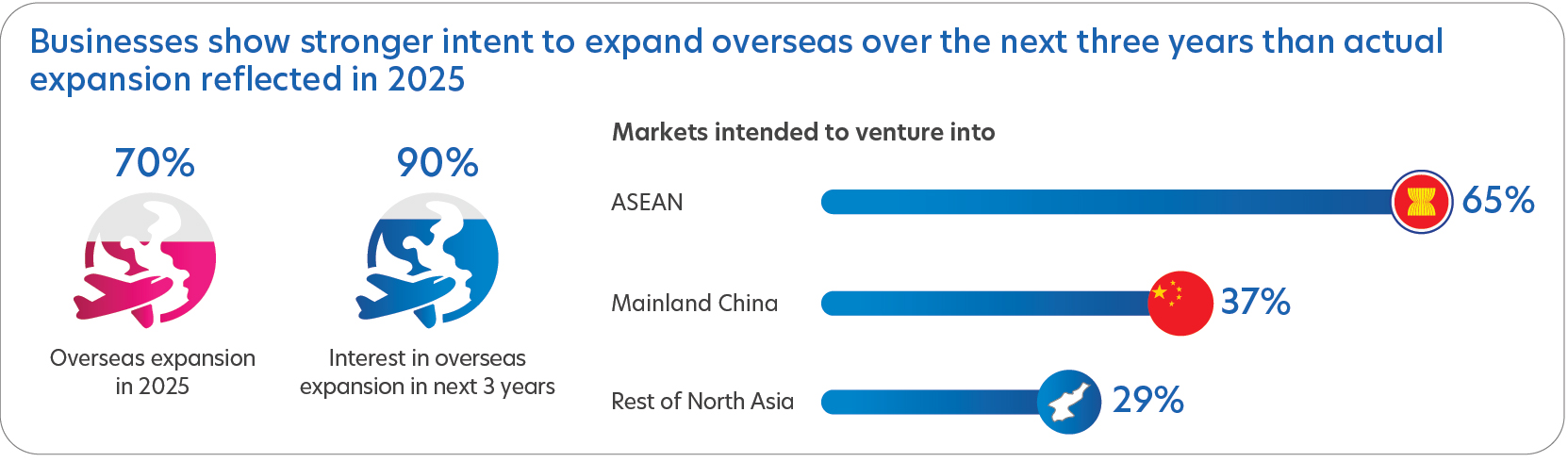
Vietnamese businesses continue to look outward. Seven in 10 expanded overseas in 2025, and nearly nine in 10 are interested in overseas expansion over the next three years. ASEAN remains the primary growth corridor, with Thailand, Singapore, and Indonesia emerging as the top target markets.
Motivations for overseas expansion are evolving. Beyond revenue growth, businesses in Vietnam are increasingly looking overseas to build manufacturing bases and capture new market opportunities.
Foreign direct investment (FDI) plans reflect this ambition. Eight in 10 businesses intend to pursue FDI over the next 12 to 24 months, with ASEAN as the leading destination (68%). Key drivers include China+1 diversification, pro-business incentives, and access to finance and local capital markets. On average, intended FDI is around US$28 million, with most businesses planning investments between US$5 million and US$25 million.
Vietnam’s H1 business outlook tells a story of resilience and growing readiness. Despite ongoing pressures, businesses are responding with sharper focus and clearer priorities. They are investing in digital and AI capabilities, taking a pragmatic approach to sustainability, strengthening supply chains, and pursuing growth opportunities abroad.
Resilience is now giving way to readiness. For business leaders, the priority is no longer just to weather uncertainty, but to leverage it—to build smarter, stronger, and more adaptable organisations.
Contact us to find out more.
Download the Vietnamese Infographic.
The UOB Business Outlook Study 2026 (Vietnam) H1 surveyed 226 business owners and senior executives from Medium and Large Enterprises. Conducted online in January 2026, the study offers insights into:
The H1 2026 edition also introduces three new Pulse Topics, offering deeper insights into emerging business priorities:

This article shall not be copied or relied upon by any person for whatever purpose. This article is given on a general basis without obligation and is strictly for information only. The information contained in this article is based on certain assumptions, information and conditions available as at the date of the article and may be subject to change at any time without notice. You should consult your own professional advisers about the issues discussed in this article. Nothing in this article constitutes accounting, legal, regulatory, tax or other advice. This article is not intended as an offer, recommendation, solicitation, or advice to purchase or sell any investment product, securities or instruments. Although reasonable care has been taken to ensure the accuracy and objectivity of the information contained in this article, UOB and its employees make no representation or warranty, whether express or implied, as to its accuracy, completeness and objectivity and accept no responsibility or liability for any error, inaccuracy, omission or any consequence or any loss or damage howsoever suffered by any person arising from any reliance on the views expressed and the information in this article.