You are now reading:
UOB Business Outlook Study 2026 (Singapore) H1: How businesses are rebuilding productivity and resilience

Find out how we can help you fast-track your investments in the JS-SEZ.
Learn more
you are in UOB ASEAN Insights


You are now reading:
UOB Business Outlook Study 2026 (Singapore) H1: How businesses are rebuilding productivity and resilience
The US/Israel-Iran conflict has intensified, resulting in a spike in crude oil and natural gas benchmarks, alongside reported supply disruptions in petrochemical feedstocks and by-products. As the most significant macroeconomic shock of the first quarter of 2026, it has reinforced cost pressures and heightened uncertainty for businesses operating across global markets.
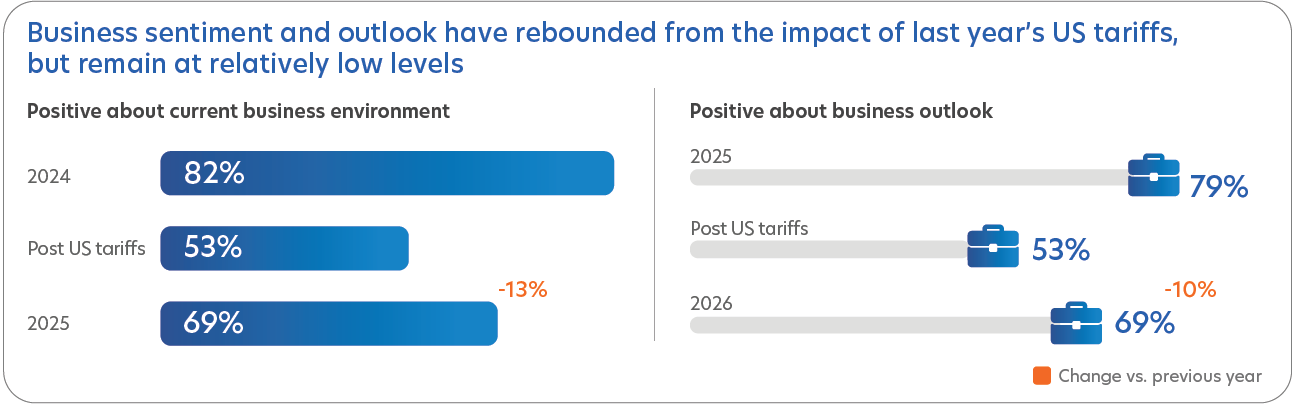
Against this backdrop, the UOB Business Outlook Study H1 2026 highlights a marked shift in business sentiment. Geopolitical tensions are now a key concern for one in four businesses, while rising operational costs affect one in three—both indicators having increased sharply since 2024. Although sentiment has rebounded following the downturn triggered by US tariffs, it now stands at 69 per cent, the lowest level recorded in the past three years.
The impact of tariffs has been uneven. Large Enterprises, with their broader international footprint, have been more exposed compared to Small and Medium Enterprises. At the same time, sectors such as manufacturing, engineering, industrials, construction, and real estate continue to face more acute pressures, particularly in operational and manpower costs.
Overall, the business outlook for 2026 remains 10 percentage points below 2025 levels, reflecting a cautious optimism shaped by persistent uncertainty. In response, businesses are increasingly turning inward, prioritising efficiency (36 per cent) and transformation (39 per cent) as they seek to strengthen their foundations in a volatile environment.
Amid ongoing macroeconomic uncertainty, the UOB Business Outlook Study 2026 reveals that:
As cost pressures mount, digitalisation has overtaken cost reduction as the primary lever for improving efficiency. Businesses are no longer focused solely on cutting expenses and instead are investing in digital capabilities to drive productivity while reskilling and upskilling their workforce.
Adoption rates are high, with more than eight in ten businesses having embarked on digitalisation initiatives. However, a clear divide remains. While 93 per cent of Large Enterprises have adopted digitalisation, only 69 per cent of Small Enterprises have done the same.
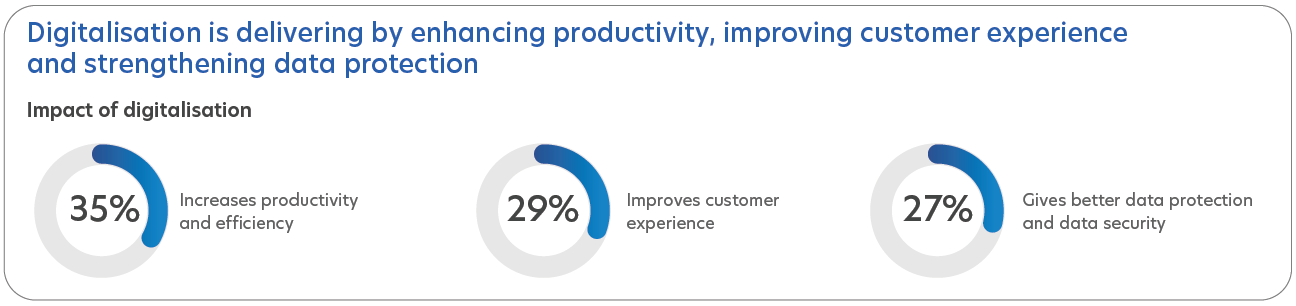
Where digitalisation has been successfully implemented, it is delivering tangible value. Businesses report improvements in productivity, enhanced customer experience, and stronger data protection capabilities. Yet, despite these gains, overall success rates have weakened. A 28-point gap in digitalisation success between Large Enterprises and Small Enterprises underscores the need for more tailored solutions that address the specific constraints faced by smaller firms.
Challenges remain consistent. The cost of implementation continues to be a significant barrier, alongside issues related to system compatibility and cybersecurity concerns. These factors have slowed the pace of progress for many organisations, particularly those operating with limited resources.
Even so, the sentiment towards digitalisation remains strong. Seven in ten businesses plan to increase their digital investments in 2026, with larger enterprises leading the way. Digitalisation is increasingly seen not just as a support function, but as a core driver of growth and productivity in an environment where efficiency has become critical.
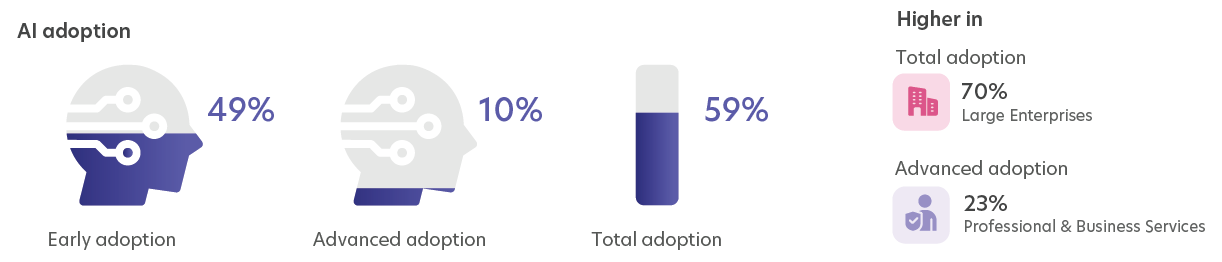
While digitalisation lays the foundation, artificial intelligence (AI) is emerging as the next phase of transformation. Adoption remains at an early stage, particularly among Small Enterprises, where one in two businesses has implemented AI solutions. In contrast, uptake is higher among Large Enterprises, especially within the Tech, Media & Telecom sectors.
The shift from experimentation to deployment is becoming more evident. Businesses are focusing on targeted applications where returns can be realised. Generative AI, customer support automation, and payments and invoicing processes are among the most common use cases.
These deployments are already delivering measurable outcomes. Nearly half of businesses report cost reductions (47 per cent), productivity gains (46 per cent), and improved customer engagement (46 per cent). The consistency of these results is reinforcing confidence in AI as a practical tool.
This growing confidence is reflected in investment intentions. One in three businesses plan to increase their AI budgets by more than 25 per cent in 2026, signalling a shift towards scaling existing capabilities. Policy direction is also playing a role. Singapore’s Budget 2026 outlines a multi-pronged approach to unlocking AI-driven productivity gains while managing associated risks, providing further impetus for adoption.
“AI is no longer a future capability but a current imperative. Organisations that embed AI into their operations will be better positioned to enhance decision-making, strengthen resilience, and stay competitive in an increasingly digital economy. Realising these outcomes anchors on critical elements, including leadership that walks the talk – aligning mindset and commitment, sustaining investment in infrastructure, and executing with discipline.”
– Alvin Eng, Head of Enterprise AI, UOB
Despite this momentum, constraints remain. Data readiness and system integration challenges continue to limit the effectiveness of AI deployment. Financial constraints, particularly among smaller businesses, and gaps in specialised talent also pose ongoing challenges.
Amid rising costs and economic uncertainty, sustainability is undergoing a recalibration. Its perceived importance has slipped back to 2022 levels, with a 24-point adoption gap emerging between Large Enterprises and Small Enterprises.
This shift indicates a change in approach. Businesses are moving away from initiatives driven primarily by reputation towards those that deliver tangible, operational benefits. Long-term competitiveness and efficiency are becoming central considerations, with over four in ten businesses adopting energy-efficient equipment and technologies.
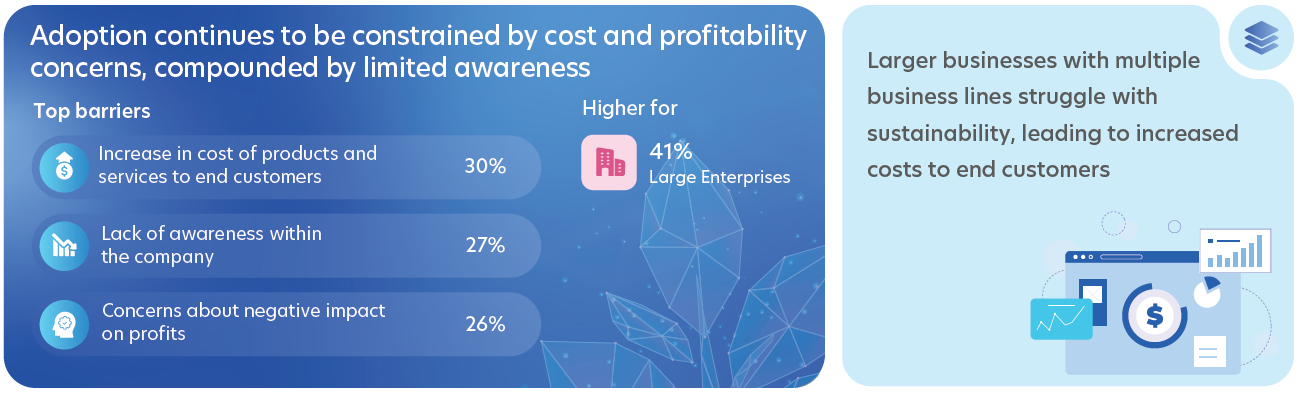
At the same time, constraints remain significant. Higher implementation costs, limited awareness, and concerns about the impact on profitability continue to slow broader adoption. For many businesses, sustainability initiatives must now demonstrate clear and measurable returns to justify investment.
This more measured approach reflects the broader balancing act businesses are navigating, needing to align longer-term sustainability goals with immediate economic realities.
Within this evolving sustainability landscape, energy management has emerged as a focal point. As energy prices rise in response to global geopolitical developments, businesses are increasingly viewing energy efficiency as both a cost management strategy and a sustainability imperative.
Three in four businesses now prioritise energy management, with Medium and Large Enterprises leading adoption efforts. These initiatives are focused on reducing consumption, lowering costs, and optimising usage through digital tools.
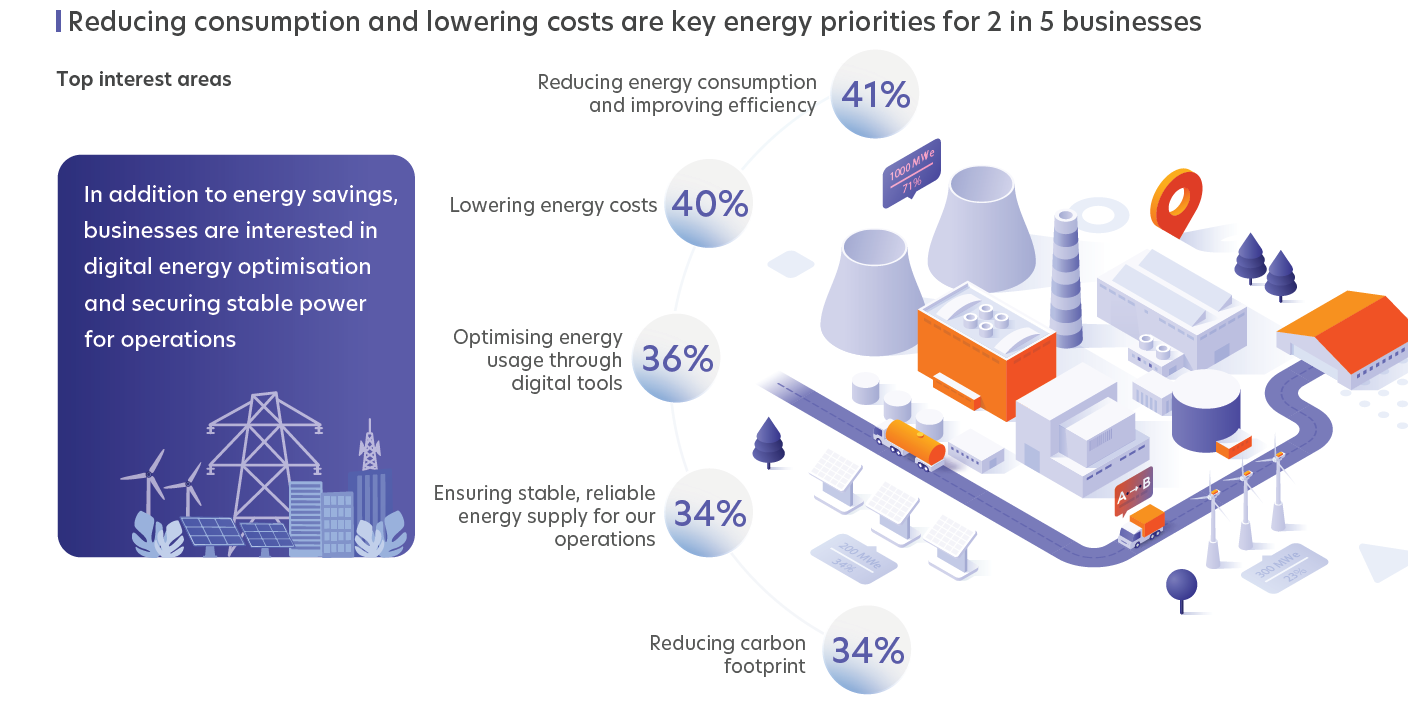
LED lighting remains the most widely adopted solution, offering immediate and measurable savings. At the same time, interest is growing in more advanced solutions such as solar panels, energy management systems, and AI-based optimisation tools. These developments align with Singapore’s broader sustainability agenda, including the Green Plan 2030, which emphasises the widespread adoption of smart energy solutions.
However, adoption is not without challenges. High upfront investment costs are cited by 36 per cent of businesses as a key barrier, while 31 per cent point to a lack of technical expertise in energy management. These constraints highlight the need for greater support in both financing and capability development to accelerate adoption.
Despite the rise in geopolitical tensions, businesses in Singapore are demonstrating increased resilience in their supply chains. The perceived impact of such tensions on supply chain stability has declined by 22 percentage points compared to 2024, suggesting that organisations are better prepared to manage disruptions.
This resilience is the result of deliberate efforts to strengthen supply chain strategies. Eight in ten businesses continue to prioritise building robust supply chain management systems, with Large Enterprises leading due to the complexity of their operations.
Diversification has become a central strategy. Businesses are reducing reliance on single sources by expanding their supplier base, thereby mitigating risks associated with disruptions. However, challenges persist. The ambiguity surrounding ‘local content’ and ‘country of origin’ regulations affect 84 per cent of businesses, complicating supply chain planning.
These challenges are driven by frequent regulatory changes (35 per cent), lack of harmonisation between trade pacts (31 per cent), and limited transparency with suppliers (31 per cent). Large Enterprises, in particular, face greater exposure due to the scale and complexity of their operations.
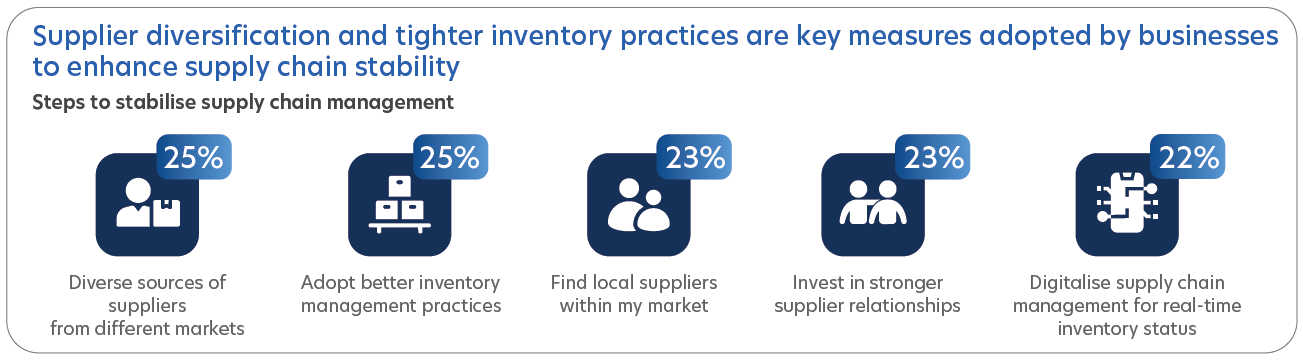
While reliance on China as a key manufacturing hub remains strong, businesses are increasingly adopting a China+1 strategy, balancing existing dependencies with diversification into alternative markets.
ASEAN is becoming central to both supply chain and growth strategies. Regional proximity is becoming a defining factor, enabling businesses to manage risks more effectively while maintaining operational efficiency.
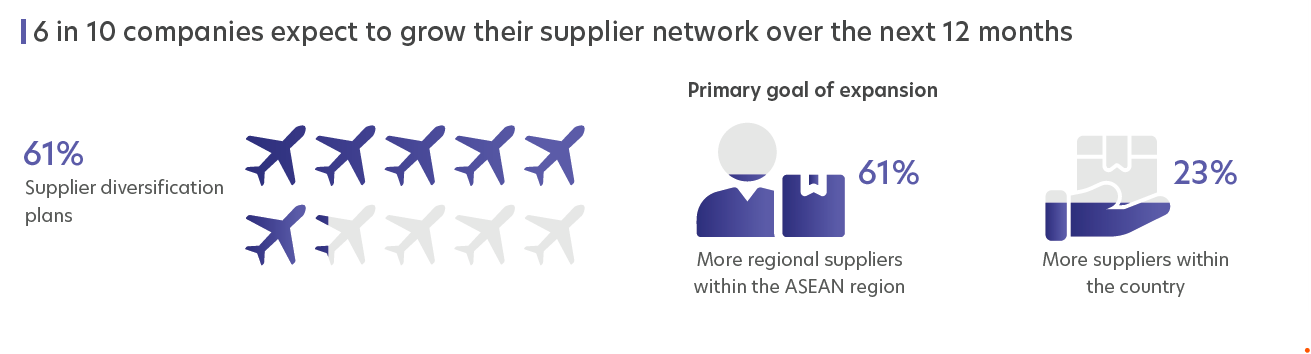
Six in ten businesses plan to expand their supplier base, with a clear preference for nearshoring within ASEAN. The motivations are consistent: access to new markets (56 per cent), cost optimisation (54 per cent), and enhanced supply chain resilience.
This shift extends beyond supplier diversification. Businesses are also focusing on improving logistics connectivity, streamlining operations, and managing risks across a more distributed regional network. ASEAN’s growing economic integration and connectivity make it an increasingly attractive base.
However, the transition is not without hurdles. Technology integration challenges, high operational costs, and gaps in required skillsets continue to pose significant obstacles.
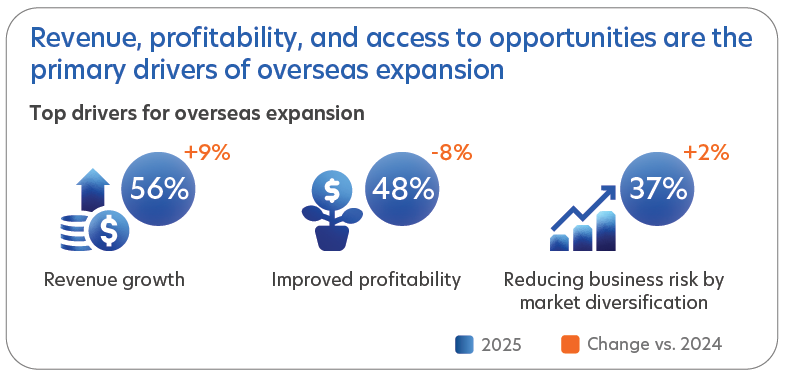
Even as businesses strengthen internal capabilities, their outlook remains outward-looking. Seventy percent of businesses plan to expand overseas within the next three years, reflecting a sustained appetite for growth beyond domestic markets. This aligns with Prime Minister and Minister for Finance Lawrence Wong’s Budget 2026, where he encourages businesses to scale overseas and deepen capabilities in new and fast-growing markets.
Economic and geopolitical uncertainties are shaping these expansion strategies. ASEAN has become the preferred destination, with 64 per cent of businesses indicating a focus on the region, up from 52 per cent a year ago. Key markets include Malaysia, Thailand, and Vietnam, while Indonesia is emerging as a future priority.
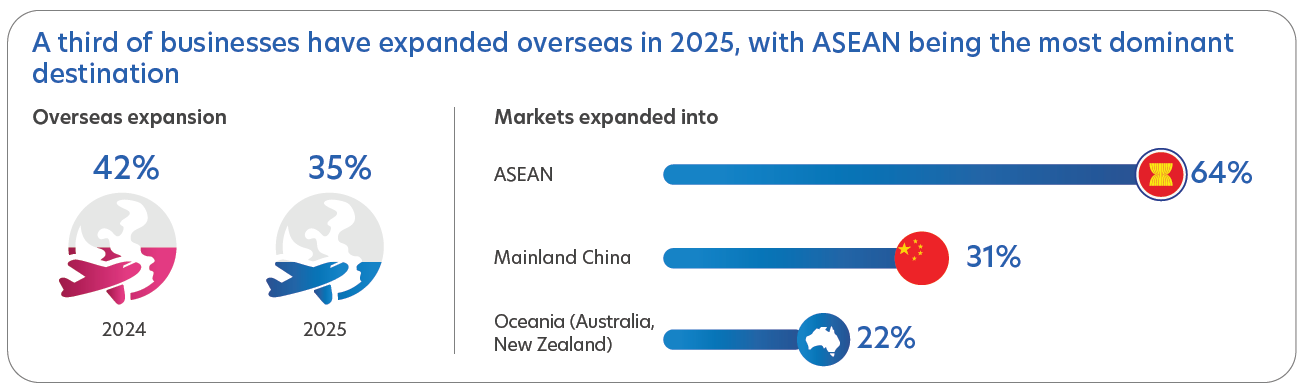
This shift is also reflected in foreign direct investment patterns. ASEAN now accounts for 64 per cent of FDI focus, surpassing China at 27 per cent. Proximity to customers and alignment with the China+1 strategy are key drivers of this trend. Planned FDI averages approximately USD 19 million over the next 12 to 24 months, led by sectors such as construction, real estate, and professional services.
Despite strong momentum, businesses continue to face barriers to expansion. Limited access to new markets (38 per cent), lack of customers (35 per cent), and limited scalability (35 per cent) remain key concerns.
With the US/Israel-Iran conflict showing limited signs of abating and cost pressures continuing to mount, businesses in Singapore are moving towards building longer-term resilience and adaptability.
The findings point to a clear shift towards building long-term resilience, supported by a focus on productivity, operational efficiency, and regional diversification.
Digitalisation and AI adoption are becoming central to this transformation, enabling businesses to optimise operations while unlocking new sources of value. At the same time, the growing importance of ASEAN reflects a strategic recalibration towards regional integration and proximity.
Businesses must continue to strengthen internal capabilities while pursuing external opportunities. Their ability to align transformation efforts with expansion strategies will shape how effectively they respond to the next phase of global disruption. Contact us to find out more.

The UOB Business Outlook Study 2026 (Singapore) H1 surveyed 381 business owners and senior executives from SMEs and Large Enterprises in Singapore. Conducted online in January 2026 the study offers insights into:
The H1 2026 edition also introduces three new Pulse Topics, offering deeper insights into emerging business priorities:
This article shall not be copied or relied upon by any person for whatever purpose. This article is given on a general basis without obligation and is strictly for information only. The information contained in this article is based on certain assumptions, information and conditions available as at the date of the article and may be subject to change at any time without notice. You should consult your own professional advisers about the issues discussed in this article. Nothing in this article constitutes accounting, legal, regulatory, tax or other advice. This article is not intended as an offer, recommendation, solicitation, or advice to purchase or sell any investment product, securities or instruments. Although reasonable care has been taken to ensure the accuracy and objectivity of the information contained in this article, UOB and its employees make no representation or warranty, whether express or implied, as to its accuracy, completeness and objectivity and accept no responsibility or liability for any error, inaccuracy, omission or any consequence or any loss or damage howsoever suffered by any person arising from any reliance on the views expressed and the information in this article.

17 Mar 2026 • 5 MINS READ

09 Dec 2025 • 5 mins read

02 Dec 2025 • 5 MINS READ
Get the UOB Business Outlook Study 2026 (Singapore) H1.Download now