The rapid growth of generative artificial intelligence (AI) and cloud computing applications has led to large, campus-style data centres mushrooming around the world, and the ASEAN region is in the spotlight.
According to market data company Arizton, data centre investment in ASEAN is expected to grow at a Compound Annual Growth Rate (CAGR) of 14.23 per cent from 2024 to 20301. By 2030, ASEAN’s total data centre capacity is forecasted to triple, reaching up to 6.5GW2.
The ASEAN proposition is compelling. Beyond cost advantages, power availability, and user proximity, the region offers a neutral location for data sovereignty and protection.
As a result, companies from around the world are expanding their data centre footprint in the region. At its annual cloud developer conference last September, Alibaba announced plans for a fourth data centre in Malaysia in 2026, and a new regional service centre in Indonesia3.
Naver, South Korea’s largest internet portal, moved its overseas data backup centre from Hong Kong to Singapore while Amazon Web Services (AWS) has committed US$5bn to build an infrastructure region in Thailand in addition to its Singapore, Indonesia and Malaysia sites.
However, this accelerated growth has had an impact on the region’s resources.
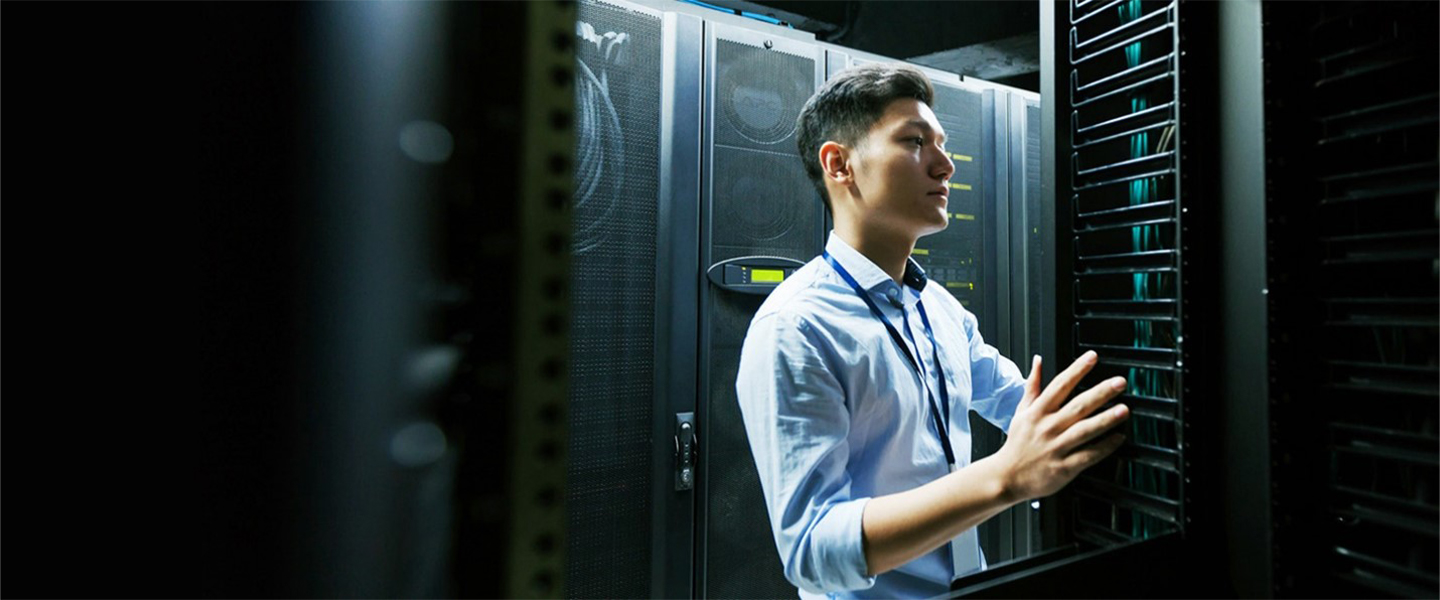
The higher compute requirements of generative AI consume large amounts of energy and water to function – from massive air-conditioning and cooling systems to lighting, ventilation, and continuous server operation.
AI workloads require a new breed of data centres that can deliver high-speed, high-capacity networking, and fast, scalable storage necessary to support foundation models, AI training, and other data-intensive machine learning applications.
According to the International Energy Agency, electricity consumption in accelerated servers, mainly driven by AI adoption, is expected to grow 30 per cent annually4 compared with conventional server electricity consumption growth of 9 per cent per year.
Southeast Asia’s data centre hubs
Across Southeast Asia, electricity demand from data centres is expected to double from 2024 to 20305, driven by data centre hubs in Singapore and Johor in Malaysia.
Beyond its strategic business hub status, Singapore’s reliable power supply, stringent data protection regulations, and intellectual property laws have fostered an ecosystem of data centre operators, cloud providers and related services. However, a moratorium on new data centres in 2019 has led companies to look across the border for alternatives.
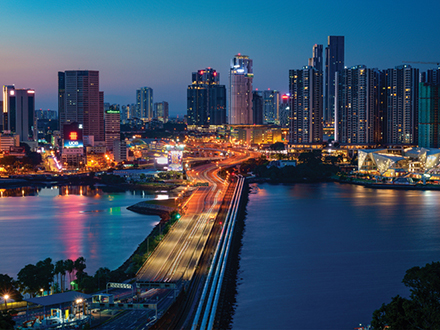
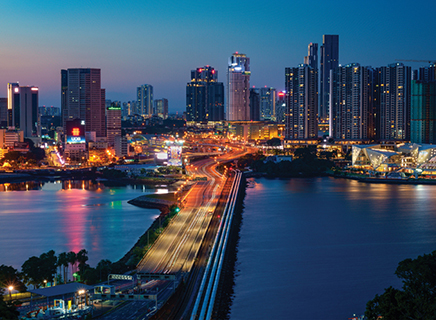
Johor, the southernmost state of Malaysia and closest in proximity to Singapore, has since evolved to be a regional data centre powerhouse in its own right, with further growth likely due to the establishment of the Johor-Singapore Special Economic Zone (JS-SEZ).
According to real estate consultancy, Cushman & Wakefield, Johor has over 3GW of potential development pipeline, compared with capital city Kuala Lumpur’s pipeline of 1.5GW.
Not to be missed, Thailand’s Board of Investment announced in January 2026 the approval of five data centre projects with a combined investment value of 91.7 billion baht or approximately S$3.7 billion6.
In Vietnam, 20 data centres have been planned, announced, or under construction in addition to the 29 data centres concentrated in either Ho Chi Minh City or Hanoi7.
Johor-Singapore SEZ Infohub
Find out how we can help you fast-track your investments in the JS-SEZ.
How are data centres in ASEAN adjusting to increased power demand?
This ramping up of data centre deployment has placed a spotlight on the region’s power capacity, renewable energy resources, and power grid stability.
Southeast Asia’s tropical climate – a combination of high ambient temperature and humidity – makes cooling one of the region’s biggest data centre challenges.
At the same time, many existing facilities were built prior to the AI-era and lack the power density, cooling or design needed for modern workloads.
The region also faces growing climate risks, including cyclones, droughts, salination, and rising sea levels, which add further pressure on resilience and resource management.
Against this backdrop, green data centres that utilise heat recycling, water reuse and on-site renewables become increasingly important.
This shift is also reinforced by governments across Southeast Asia that have tightened sustainability requirements around energy efficiency, renewable integration and water stewardship for new data centre developments.
For new Singapore data centres, there is continued focus on sustainable growth, with criteria around power usage effectiveness (PUE), advanced cooling, and low‑carbon power following its 2019–2022 pause on new builds.
Meanwhile, the Johor authorities have rejected about 30 per cent of proposals since mid‑2024 due to inadequate sustainability or utility planning. They have also stopped approvals for lower‑tier facilities that use up to 50 million litres of water per day, directing investment towards higher‑efficiency designs.
In April 2025, data centre group AirTrunk announced a partnership with Johor Special Water (JSW) to develop Malaysia’s largest recycled water supply scheme for data centres, treating unused wastewater for non-potable cooling.
Further up north, the Thai Government has approved a direct power purchase scheme that allows hyperscale data centre operators to purchase electricity directly from renewable energy generators.
How green finance can help fund new data centres
While green data centres can help align rising digitalisation needs with sustainability goals, the financial investment may be substantial.
Green lending arrangements can help offset the high initial capital outlay as they tend to cost lower than traditional financing instruments.
For example, UOB acted as a joint green loan coordinator for a RM1.3bn loan to fund Princeton Digital Group’s new AI-ready data centre campus in Johor.
The bank has also supported Day One’s regional expansion in Batam and Johor and facilitated the financing of Singtel’s recently launched DC Tuas – an AI-ready green data centre with advanced cooling capabilities.
At UOB, we believe that support goes beyond innovative financing. It’s about enabling sustainable growth across industries and making the most of our wide ASEAN connectivity and deep industry knowledge.
To know more about green financing solutions, please contact your UOB Relationship Manager or email us. To find out more about how we can help companies enter or expand in Southeast Asia, please contact our FDI Advisory team.
1Arizton Advisory & Intelligence, Southeast Asia Data Center Market, accessed 4 March 2026, https://www.arizton.com/market-reports/southeast-asia-data-center-market
2KPMG, The Asia Data Centre Landscape, accessed 4 March 2026, (KPMG, 2025), 3, https://www.arizton.com/market-reports/southeast-asia-data-center-market
3Alibaba Cloud, Alibaba Cloud Announces International Expansion Plans to Power the Next-Generation AI Innovations, accessed 4 March 2026, https://www.alibabacloud.com/en/press-room/alibaba-cloud-announces-international-expansion-pi?_p_lc=1&spm=a3c0i.8288105.8942115220.34.1dfc6a37ZebA4K
4International Energy Agency, Energy and AI, (IEA, 2025), 63, https://iea.blob.core.windows.net/assets/de9dea13-b07d-42c5-a398-d1b3ae17d866/EnergyandAI.pdf
5International Energy Agency, Southeast Asia Energy Outlook (IEA, 2024), 84, https://iea.blob.core.windows.net/assets/ac357b64-0020-421c-98d7-f5c468dadb0f/SoutheastAsiaEnergyOutlook2024.pdf
6Thailand Board of Investment, Thailand BOI Approves Higher Tech, HRD Requirements for Data Center Investments, Promotion Measures for Local SMEs; Green-Lights USD 3 Billion Projects in Data Center, Wind Power, (BOI, 2025), accessed 4 March 2026, https://www.boi.go.th/index.php?page=press_releases_detail&topic_id=136939&_module=news&from_page=press_releases2&language=en
7Arizton Advisor & Intelligence, Vietnam Existing and Upcoming Data Centre Portfolio, accessed 6 March 2026, https://www.arizton.com/market-reports/vietnam-data-center-portfolio
This article shall not be copied or relied upon by any person for whatever purpose. This article is given on a general basis without obligation and is strictly for information only. The information contained in this article is based on certain assumptions, information and conditions available as at the date of the article and may be subject to change at any time without notice. You should consult your own professional advisers about the issues discussed in this article. Nothing in this article constitutes accounting, legal, regulatory, tax or other advice. This article is not intended as an offer, recommendation, solicitation, or advice to purchase or sell any investment product, securities or instruments. Although reasonable care has been taken to ensure the accuracy and objectivity of the information contained in this article, UOB and its employees make no representation or warranty, whether express or implied, as to its accuracy, completeness and objectivity and accept no responsibility or liability for any error, inaccuracy, omission or any consequence or any loss or damage howsoever suffered by any person arising from any reliance on the views expressed and the information in this article.
About the author
Terence currently leads the sector coverage for Telecom, Media & Technology (TMT) in Group Wholesale Banking, UOB. He has been with the Bank for more than 15 years, starting as the team leader in Corporate Banking Overseas responsible for TMT coverage before assuming his current role as MD & Head TMT since 2019. Terence has about three decades of banking experience, and is passionate about developing banking ideas and solutions that are aligned with the changing global economic environment for his clients across multiple countries within the Asia Pacific region. He has originated and successfully executed several key transactions in Structured Finance (M&A Financing & Project Finance), Supply Chain Trade Finance and Investment Banking across his banking experience with regional and international banks.
Follow Terence on LinkedIn