


Balancing Growth with Stability for the Long Term / Chairman's Statement
Chairman's Statement
Looking ahead, our priority is on reshaping our business model towards a more diversified and fee-driven revenue mix, leveraging our regional scale and connectivity... Turning 90 was an appropriate opportunity to reflect on our journey and prepare for the future. In 2025, the Board worked closely with Management to review and sharpen the Bank’s strategy – mapping out a 10-year plan which will guide us towards our next chapter of growth, anchored on ASEAN’s long-term potential.
The global economy in 2025 turned out to be more robust than expected, amid heightened trade volatility and geopolitical uncertainties.
Overall, inflation remained contained. Most central banks eased monetary policies, leaving room for more accommodation in 2026. Global supply chains across industries are reconfiguring to the new order.
The sharp escalation of conflict in the Middle East – marked by the US-Israel military action against Iran and Iran’s reaction – has significantly heightened geopolitical risks and market volatility, with potential implications for global energy markets, trade flows and supply chains. These developments add to an already complex environment as the Russia-Ukraine war remains unresolved and US-China frictions continue to add downside risks to global growth. At the same time, the latest US tariff developments in response to the US Supreme Court’s ruling have brought renewed uncertainties to global trade policy.
Looking ahead, the global economy is expected to face headwinds as the full impact of US tariffs becomes more pronounced and payback from earlier front-loading tempers momentum. Global growth is expected to hold steady albeit at a slower pace. Persistent tariff uncertainties and intensifying economic fragmentation will reshape trade and investment flows.
China’s economic recovery remains fragile, although momentum is expected to moderate steadily, supported by domestic consumption and government investments.
Overall, inflation remained contained. Most central banks eased monetary policies, leaving room for more accommodation in 2026. Global supply chains across industries are reconfiguring to the new order.
The sharp escalation of conflict in the Middle East – marked by the US-Israel military action against Iran and Iran’s reaction – has significantly heightened geopolitical risks and market volatility, with potential implications for global energy markets, trade flows and supply chains. These developments add to an already complex environment as the Russia-Ukraine war remains unresolved and US-China frictions continue to add downside risks to global growth. At the same time, the latest US tariff developments in response to the US Supreme Court’s ruling have brought renewed uncertainties to global trade policy.
Looking ahead, the global economy is expected to face headwinds as the full impact of US tariffs becomes more pronounced and payback from earlier front-loading tempers momentum. Global growth is expected to hold steady albeit at a slower pace. Persistent tariff uncertainties and intensifying economic fragmentation will reshape trade and investment flows.
China’s economic recovery remains fragile, although momentum is expected to moderate steadily, supported by domestic consumption and government investments.
The strength of ASEAN in a multipolar world
Against these uncertainties, ASEAN economies ended 2025 on a strong note, growing 4.8 per cent. Concerns that tariffs would curb exports and growth proved less severe than expected.
ASEAN remains a critical growth engine, anchored by solid economic fundamentals. The realignment of supply chains is boosting intra-regional trade, creating opportunities for ASEAN exports, particularly for Malaysia and Singapore in artificial intelligence (AI) and electronics.
In the first half of 2025, foreign direct investment (FDI) flows into ASEAN grew 10.2 per cent from the year before, led by Singapore and Thailand. By 2030, total FDI flows into ASEAN are expected to reach US$370 billion with total trade flows projected to expand to around US$5.3 trillion.
ASEAN’s economy is projected to grow to nearly US$5.8 trillion by 2030, up 40 per cent from US$4.2 trillion in 2025. Over the medium-term, ASEAN-6 economic growth is expected to average around 4.6 per cent per annum.
The Johor-Singapore Special Economic Zone is set to strengthen supply chains and deepen regional integration in ASEAN. Coupled with the rise of the digital and green economies, these developments will further propel ASEAN’s growth trajectory.
With UOB’s strong regional footprint, we are well positioned to support businesses and individuals across ASEAN and those wanting to enter this region.
Amid the uncertain macroeconomic environment, UOB achieved net profit of $4.7 billion in 2025. The Board recommends a final dividend of 71 cents per ordinary share. This brings total dividend for 2025 to $1.56 per ordinary share, maintaining a payout ratio of 50 per cent.
The 2025 dividend payment reflects softer earnings amid a more challenging macroeconomic climate, and is not affected by the pre-emptive general allowances that the Bank proactively took in the third quarter of 2025 to strengthen overall provision coverage.
ASEAN remains a critical growth engine, anchored by solid economic fundamentals. The realignment of supply chains is boosting intra-regional trade, creating opportunities for ASEAN exports, particularly for Malaysia and Singapore in artificial intelligence (AI) and electronics.
In the first half of 2025, foreign direct investment (FDI) flows into ASEAN grew 10.2 per cent from the year before, led by Singapore and Thailand. By 2030, total FDI flows into ASEAN are expected to reach US$370 billion with total trade flows projected to expand to around US$5.3 trillion.
ASEAN’s economy is projected to grow to nearly US$5.8 trillion by 2030, up 40 per cent from US$4.2 trillion in 2025. Over the medium-term, ASEAN-6 economic growth is expected to average around 4.6 per cent per annum.
The Johor-Singapore Special Economic Zone is set to strengthen supply chains and deepen regional integration in ASEAN. Coupled with the rise of the digital and green economies, these developments will further propel ASEAN’s growth trajectory.
With UOB’s strong regional footprint, we are well positioned to support businesses and individuals across ASEAN and those wanting to enter this region.
Amid the uncertain macroeconomic environment, UOB achieved net profit of $4.7 billion in 2025. The Board recommends a final dividend of 71 cents per ordinary share. This brings total dividend for 2025 to $1.56 per ordinary share, maintaining a payout ratio of 50 per cent.
The 2025 dividend payment reflects softer earnings amid a more challenging macroeconomic climate, and is not affected by the pre-emptive general allowances that the Bank proactively took in the third quarter of 2025 to strengthen overall provision coverage.
Celebrating 90 years at UOB
2025 was a significant year as we commemorated our 90th anniversary. We marked this special milestone by pledging a combined impact of $120 million to educational initiatives supporting 250,000 disadvantaged students and children across the region. This commitment reflects our purpose to build a brighter future for ASEAN and its people.
We successfully completed the integration of our Citigroup portfolio across our four key ASEAN markets, expanding our customer base to 8.5 million across the region. Looking ahead, our priority is on reshaping our business model towards a more diversified and fee-driven revenue mix, leveraging our regional scale and connectivity.
We successfully completed the integration of our Citigroup portfolio across our four key ASEAN markets, expanding our customer base to 8.5 million across the region. Looking ahead, our priority is on reshaping our business model towards a more diversified and fee-driven revenue mix, leveraging our regional scale and connectivity.
Charting our next chapter of growth towards UOB100
Turning 90 was an appropriate opportunity to reflect on our journey and prepare for the future. In 2025, the Board worked closely with Management to review and sharpen the Bank’s strategy – mapping out a 10-year plan which will guide us towards our next chapter of growth, anchored on ASEAN’s long-term potential.
Over the past decade, we have built up our product capabilities and systems to support our key growth drivers in connectivity, personalisation and sustainability. Our results from 2025 showed strong growth in our key business drivers such as trade and wealth.
As we look towards UOB100, the Group will continue to harness these capabilities and execute our strategy with discipline. We will further drive growth in regional markets, deepen cross-sell and cost synergies post Citi acquisition, manage costs and elevate the customer experience.
Over the past decade, we have built up our product capabilities and systems to support our key growth drivers in connectivity, personalisation and sustainability. Our results from 2025 showed strong growth in our key business drivers such as trade and wealth.
As we look towards UOB100, the Group will continue to harness these capabilities and execute our strategy with discipline. We will further drive growth in regional markets, deepen cross-sell and cost synergies post Citi acquisition, manage costs and elevate the customer experience.
Forging a sustainable future for ASEAN
Last year, the global banking industry’s net zero alliance was disbanded following the exit of major global banks amid political and market headwinds, signalling a shift in global priorities for climate action.
Notwithstanding these setbacks, sustainability remains a core focus for the Board and Management. We remain committed to enabling a fair and just transition for the region, balancing economic progress with environmental and social responsibility. As a leading financial institution in the region, UOB plays a key role in being a long-term enabler in driving positive change towards a sustainable and inclusive future for ASEAN.
Our people are our greatest assets. The Board and Management are committed to nurturing a resilient and future-ready workforce, to thrive in the fast-evolving AI-enabled economy. A 2025 survey of chief risk officers at financial institutions in North America found that about one-third of leaders say a lack of workforce capabilities and appropriate training is the main roadblock to banks’ AI adoption. In 2025, UOB launched an organisation-wide AI upskilling and reskilling initiative to equip employees with the skills and strategies to uplift their productivity.
We also accelerated our innovation agenda by establishing the Innovation Group and UOB Innovation Academy to advance the Bank's AI and Generative AI capabilities.
Notwithstanding these setbacks, sustainability remains a core focus for the Board and Management. We remain committed to enabling a fair and just transition for the region, balancing economic progress with environmental and social responsibility. As a leading financial institution in the region, UOB plays a key role in being a long-term enabler in driving positive change towards a sustainable and inclusive future for ASEAN.
Our people are our greatest assets. The Board and Management are committed to nurturing a resilient and future-ready workforce, to thrive in the fast-evolving AI-enabled economy. A 2025 survey of chief risk officers at financial institutions in North America found that about one-third of leaders say a lack of workforce capabilities and appropriate training is the main roadblock to banks’ AI adoption. In 2025, UOB launched an organisation-wide AI upskilling and reskilling initiative to equip employees with the skills and strategies to uplift their productivity.
We also accelerated our innovation agenda by establishing the Innovation Group and UOB Innovation Academy to advance the Bank's AI and Generative AI capabilities.
Upholding our strong risk culture
UOB’s success over the last nine decades has been anchored by our values of Honour, Enterprise, Unity and Commitment, which will continue to guide us towards our centennial and beyond.
Our commitment to uphold the highest standards of corporate governance and foster a strong risk culture earned us the “Best Managed Board – Silver Award” and “Best Risk Management – Silver Award” at the Singapore Corporate Awards 2025.
Our Management has set up the Culture and Conduct Committee, headed by Mr Wee Ee Cheong, our Deputy Chairman and CEO. This committee emphasises the importance of our employees conducting ourselves in a proper manner, and keeping customers’ needs at the forefront of all we do.
Money laundering remains a persistent and evolving challenge for financial institutions globally. The Board and Management are fully committed to beefing up our anti-money laundering and financing of terrorism measures and ensuring compliance with regulatory requirements. Over the last few years, we have invested significantly in technology and data analytics to enhance our internal risk management standards and capabilities further. We will continue to work closely with our regulator and law enforcement agencies to combat financial crimes.
Scams remain a pressing concern even as reported cases in Singapore declined year on year in 2025. The rapid evolution of AI and deepfake technology has made scams increasingly sophisticated and harder to detect. We remain committed to combating financial crime, by continually investing in and enhancing our real-time fraud surveillance capabilities to safeguard our customers. While the fight against scams is a collective effort, customers must continue to remain vigilant and serve as the first line of defence against scammers.
Our commitment to uphold the highest standards of corporate governance and foster a strong risk culture earned us the “Best Managed Board – Silver Award” and “Best Risk Management – Silver Award” at the Singapore Corporate Awards 2025.
Our Management has set up the Culture and Conduct Committee, headed by Mr Wee Ee Cheong, our Deputy Chairman and CEO. This committee emphasises the importance of our employees conducting ourselves in a proper manner, and keeping customers’ needs at the forefront of all we do.
Money laundering remains a persistent and evolving challenge for financial institutions globally. The Board and Management are fully committed to beefing up our anti-money laundering and financing of terrorism measures and ensuring compliance with regulatory requirements. Over the last few years, we have invested significantly in technology and data analytics to enhance our internal risk management standards and capabilities further. We will continue to work closely with our regulator and law enforcement agencies to combat financial crimes.
Scams remain a pressing concern even as reported cases in Singapore declined year on year in 2025. The rapid evolution of AI and deepfake technology has made scams increasingly sophisticated and harder to detect. We remain committed to combating financial crime, by continually investing in and enhancing our real-time fraud surveillance capabilities to safeguard our customers. While the fight against scams is a collective effort, customers must continue to remain vigilant and serve as the first line of defence against scammers.
Board Acknowledgements
On behalf of the Board, I would like to extend my appreciation to the Management and the UOB team – past and present – for their hard work and contributions over the past 90 years. We also thank our shareholders, customers, partners and the community for the trust and unwavering support they continue to place in us. Our promise remains, to always be, and always do, right by you.
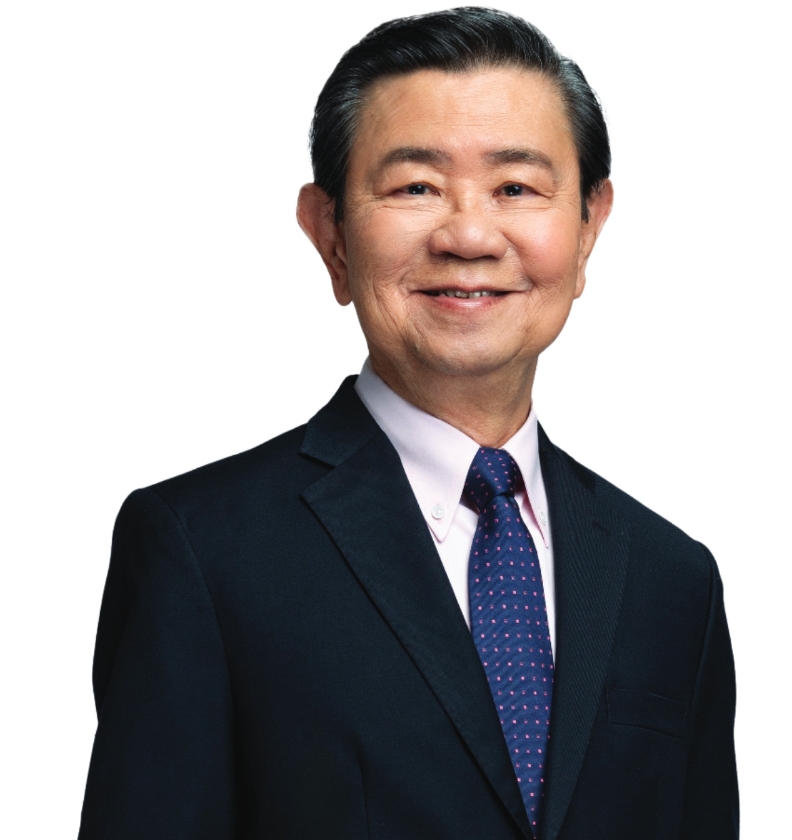
Wong Kan Seng
Chairman
February 2026
Balancing Growth with Stability for the Long Term
Chairman's Statement
Deputy Chairman and CEO’s Report
Financial Highlights
Investor Highlights
Sustainability Highlights

